Last updated November 18, 2026




Free written scope consultation - allowances, timeline, and change-order rules on paper before a single trade is scheduled
Driveway & Pavers Troubleshooting in Carrollton: Common Problems and How to Fix Them
If your pavers are sinking in the same spot every spring, the problem isn’t the pavers. It’s what’s happening eight inches below them, and no amount of re-sanding the surface will stop it from happening again. That’s the hard truth most homeowners learn after paying twice for the same repair. The sunken section gets patched, the sand gets topped off, and by the next wet season the dip is back. What follows is a guide to reading what your driveway is actually telling you: how to tell a base failure from a surface problem, why the soil under Carrollton driveways behaves the way it does, when joint sand is the right fix and when it’s a sales pitch for a drainage issue, and how to know whether a repair is worth doing or whether replacement is the smarter money. We’ll walk you through diagnosis first, because the fix only works if the diagnosis is right.
Quick Answer
Most driveway paver problems in Carrollton come down to one of three causes: a failing base layer that lets the surface settle unevenly, joint sand washing out during heavy rain, or staining from efflorescence, rust, or organic growth. Surface remedies like re-sanding or pressure washing only solve the problem permanently when the cause is actually at the surface. Sunken sections that reappear in the same location after a repair almost always point to a base or drainage failure underneath, which requires excavation and recompaction, not another layer of sand.
Styles & brands we work with
- Kitchen remodeling
- Bathroom remodeling
- Home additions & ADU
- Roofing
- Windows & doors
- Driveway & pavers
- Fence
Table of Contents
- Why Do Pavers Sink in the Same Spot Every Year?
- Base Failure vs. Sand Migration: How to Tell the Difference
- How Carrollton’s Clay Soil Causes Differential Settling
- Joint Sand Erosion After Texas Storms: When Polymeric Sand Helps
- Efflorescence and Rust Staining: What Works and What Voids a Warranty
- Repair or Replace? The Honest Decision Point
- Drainage and Slope Problems You Can Spot Yourself
- What Routine Paver Care Actually Prevents
Why Do Pavers Sink in the Same Spot Every Year?
Pavers sink in the same spot repeatedly because the compaction beneath that spot was never correct to begin with, or because water is reaching the base layer and softening it. Sand brushed into the joints sits on top of the pavers. It does nothing to hold up the base. When a repair crew fills a dip with sand and re-levels the surface pavers, they’re treating the visible result of a problem that lives several inches deeper. The next wet cycle opens it back up.
There are a few distinct patterns, and each one tells you something different:
- Sinking concentrated in one area, especially near the garage apron or the street transition: usually a base compaction problem, or water running under the pavers from a downspout or a low spot in the yard.
- Sinking spread evenly across the whole driveway: often a sign the original base layer was undersized or built on soil that wasn’t prepared properly.
- Pavers that rock underfoot but don’t appear sunken: joint sand has washed out and bedding sand has migrated, leaving individual units unsupported.
- Ruts in the wheel paths: traffic load meeting insufficient base depth, common on driveways built for cars that now see heavier vehicles.
The pattern matters more than the depth of the dip. A one-inch settle near the street that returns every year points to water, not load. A two-inch dip in the middle of the driveway that never changes points to base. Reading the pattern is the whole diagnosis, and it’s the step most homeowners skip when they call for a quick sand top-off. In Carrollton, where summer heat bakes the surface and fall storms arrive with real force, that dipped section can go from minor annoyance to a tripping hazard in a couple of seasons.
Base Failure vs. Sand Migration: How to Tell the Difference
Base failure means the compacted gravel and soil layer under the pavers has lost its structural integrity. Sand migration means the fine bedding sand between the base and the pavers has shifted or washed away while the base remains sound. The two look similar from the surface, and the treatment is completely different. Base failure requires excavation. Sand migration is a surface-fixable problem.
Here’s how to run the check yourself before calling anyone out:
- Walk the affected area slowly. A hollow or rocking sound underfoot, with a visible dip that doesn’t move when you press down, suggests the pavers are bridging an empty space. That’s a base symptom.
- Press on individual pavers. If they rock and settle back, the bedding sand has likely migrated. If they feel loose and sit at different heights without any spring, the base itself may be failing.
- Look at the joint lines. Wide, uneven joints that open up after rain and stay open point to sand loss. Joints that stay tight while the whole surface dips point to base movement.
- Check the edges and borders. If the restraint edge has moved, the pavers have spread and the joints opened as a result. That’s an edge problem feeding into sand loss.
- Observe after rain. Water pooling in the dip for hours is a drainage problem. Water disappearing fast through wide joints is a sign the sand layer is gone.
This is the single most important test in the whole troubleshooting process. If the base is the problem, you need excavation to the failing layer, recompaction, new base material, and re-laying. If the sand is the problem, you need to lift and re-bed the affected pavers, refill the joints, and find the source of the sand loss. Treating the wrong one is how people end up paying for the same repair twice. When a professional comes out to look, they should be able to tell you which failure they’re looking at and explain why the fix matches the cause. If they can’t, that’s your answer about whether to hire them.
How Carrollton’s Clay Soil Causes Differential Settling
Carrollton sits on expansive clay soil, which means the ground beneath your driveway moves with the seasons. Clay swells when it absorbs water and shrinks as it dries out. A driveway built on clay that wasn’t prepared with proper grading, drainage, and compaction will experience differential settling, meaning different sections of the base move at different rates. That’s why sinkage rarely appears evenly. It concentrates where the water reaches first, where the base was thinnest, or where the original builder skipped a step.
The spots in a Carrollton driveway that carry the highest risk are consistent:
- The garage apron and the street transition. Water runs toward these joints from both directions, and they’re where the base is most often undersized or interrupted.
- Low side-yard areas near a downspout. Roof runoff that dumps beside the driveway saturates the clay and softens the base beneath the edge of the pavers.
- Where an expansion joint or old concrete pour meets the pavers. Two surfaces moving at different rates create a gap, and water finds it.
- Heavy-vehicle traffic paths. The wheel tracks see the most load and the most flex on a weak base.
- Areas with poor crown or cross-slope. Water that can’t run off sits on the joints and works its way down.
Understanding the clay is the reason our approach to driveway & pavers in Carrollton starts with drainage and base prep before anything decorative goes down. A paver system built to spec on Carrollton clay looks different below grade than one that will fail in two seasons. The base depth, the compaction equipment used, and how water is directed away from the pavers all matter more than the paver pattern. All of that is invisible once the driveway is finished. It’s also the only part that determines how many springs you get before the first dip.
Joint Sand Erosion After Texas Storms: When Polymeric Sand Helps
Joint sand erodes because water moves through the joints, not because the sand is defective. Every hard rain pushes fine sand out of the joints and off the driveway, and the wider the joint, the faster it goes. Texas storms bring intense rain in a short window, which is hard on joint sand. If you see sand washing into the street after a storm, you’re watching the joints open up in slow motion.
Polymeric sand is the right answer when the joints have been properly cleaned and the pavers are correctly set. It binds the sand into a firm, water-resistant filler that resists erosion far better than plain sand. In our experience, it holds up well in Carrollton when it’s installed correctly. But it is not a fix for a drainage problem, and it’s routinely oversold as one.
Here’s when polymeric sand will and won’t help:
- Works well: joints are 1/8 to 1/4 inch wide, clean and dry, and the pavers are stable. The sand is the last piece of a correctly built system.
- Works well: a driveway that’s simply due for joint replenishment after several seasons. The base is sound and the joints just need refilling.
- Won’t help: water is pooling on the surface or running under the pavers. Polymer sand stops sand loss, not water movement, and it will fail if the drainage underneath is wrong.
- Won’t help: joints are too wide because the pavers have spread. The joint width itself is the problem, and a new restraint edge is the fix.
- Won’t help: applied wet or too soon after a storm. Polymer sand needs dry conditions to set correctly, and a rushed install will fail within a season.
If you’ve been told polymeric sand will solve a problem that started with a dip, ask what’s being done about the drainage. That’s the real question. A joint-sand refill is a legitimate and valuable maintenance job on a healthy driveway. On a driveway with a drainage problem, it’s a temporary bandage on a wound that’s still bleeding. We always check the drainage first, because the sand is the last step, not the first.
Efflorescence and Rust Staining: What Works and What Voids a Warranty
Efflorescence is a white, chalky powder that appears on paver surfaces. It’s salt from within the concrete or the base, carried to the surface by water as it evaporates. Rust staining is usually orange or brown and comes from a different source: metal embedded near the driveway, furniture left on the surface, or iron-rich water running off a bad downspout. The two look similar at a glance and have completely different treatments.
Efflorescence responds to the right cleaner, but the correct product matters. A manufacturer-approved efflorescence remover, diluted to spec and applied to a pre-wetted surface, removes the salt deposits without etching the paver. A generic acid wash or a heavy acid concentration will strip the surface layer and can void the manufacturer’s warranty on Belgard, Unilock, Techo-Bloc, or Cambridge Pavers material. Those warranties are the reason we don’t improvise. When a driveway is covered by a product warranty, cleaning with the wrong chemistry can cost you the coverage on the whole installation.
Rust staining is a different problem. It needs a dedicated rust remover formulated for concrete pavers, and the source has to be eliminated or the stain comes back. If a metal downspout is the cause, repainting or relocating it stops the cycle. If a metal furniture foot is the cause, that’s the easy one. If iron-rich water is draining onto the pavers, the drainage needs to be redirected before cleaning.
Organic stains, from algae or moss growing in shaded areas, are the simplest to treat with a standard paver cleaner. Efflorescence and rust are where homeowners get into trouble, because a pressure washer set too high, a harsh acid, or a homemade solution can scar the surface and void a warranty. If the tile isn’t clear to you, or the stain has been there a while, call someone who can identify the cause first. The wrong product can cost more than the stain did. Staining and cleaning are covered by some manufacturer warranties and explicitly excluded by others, so it’s worth asking before you spray anything on the pavers.
Repair or Replace? The Honest Decision Point
A repair is the right financial call when the failure is localized, the base around the affected area is sound, and the rest of the driveway is stable. Replacement is the smarter money when the failure is widespread, the base is failing in multiple locations, or the driveway was built with undersized base to begin with. There’s a clear line between the two, and it’s not a judgment call you have to guess at.
Here’s how to think about it:
- Count the failure locations. One dip in a driveway that’s otherwise flat usually means a localized issue. Three or more areas failing independently point to a systemic base problem.
- Check the age of the install. A driveway less than ten years old with widespread settling was probably built on thin base. Patching it buys time; replacing it solves the problem.
- Measure the settle depth. A single dip under half an inch can often be re-bedded. A dip over an inch that returns after a repair is a base failure.
- Look at the paver condition. If the pavers themselves are intact and the joints are healthy, replacement usually means re-laying the same pavers over a rebuilt base, which is cheaper than buying new material.
- Ask about drainage first. If the cause is water running under the pavers, no repair lasts until that water is redirected. A partial rebuild that skips drainage will fail again.
There’s an honest middle option most homeowners never hear: a partial rebuild. That means excavating and rebuilding the failing section, re-laying the existing pavers over the new base, and matching the rest of the driveway. It costs less than a full replacement and solves the actual problem, provided the drain is fixed at the same time. We walk Carrollton homeowners through this decision, not toward the biggest job. A driveway that only needs one section rebuilt should get one section rebuilt. A driveway that’s failing everywhere deserves the honest news that a patch will not hold. The difference is diagnosable, and it should be diagnosed before a quote is written. When you’re ready to price out a repair or replacement, our driveway & pavers team handles the whole scope, from base excavation to finish.
Drainage and Slope Problems You Can Spot Yourself
Water is the engine behind almost every paver problem on a Carrollton driveway. If you can find where the water goes, you can usually predict where the pavers will fail next. A few simple checks will tell you what your driveway is doing.
Walk the driveway after a good rain. Watch where the water pools, where it runs, and where it drains. Anything that pools for more than an hour is a problem. Then check these:
- The crown. A driveway should slope gently away from the center toward the edges, so water runs off. A flat or bowl-shaped section holds water, and holding water is the start of a base failure.
- The garage apron. Water should run away from the garage doors, not toward them. If it runs in, the slope is wrong or the joint is failing.
- Downspouts. A downspout that dumps within a few feet of the driveway edge floods the clay under the pavers. Extending it ten feet away is a cheap fix that prevents an expensive one.
- The street transition. The edge where the driveway meets the street takes the most water. If the pavers there sit below the street level, water will run in.
- The side edges. If the restraint edge is missing or the pavers have spread, water enters from the side and the joints open.
Fixing the drainage is not a decorative task. It’s the structural part of the job, and it’s why a paver driveway built correctly on Carrollton clay looks different below the surface than one built to a low bid. When the slope is wrong, the pavers will keep failing no matter how many times they’re re-sanded. If you’re planning a full exterior upgrade, our Construction Carrollton team can look at the driveway, drainage, and grading together so the fix doesn’t get isolated from the rest of the property. That whole-property view is one of the reasons we approach paver work as a system rather than a surface finish.
What Routine Paver Care Actually Prevents
Routine paver care prevents exactly two things: joint sand loss and surface staining. It does not prevent base failure, and pretending it does is where the paver-maintenance pitch goes off the rails. But when the joints are kept filled and the surface is cleaned with the right products, a correctly built driveway holds up for a long time in Carrollton, with far fewer repairs than a neglected one.
What care actually does, in order of value:
- Refill the joints before they open wide enough to lose sand fast. This is the highest-value routine task, and it’s usually a job for every few years on a healthy driveway.
- Keep the restraint edge in place. The border pavers hold the whole surface tight. If the edge moves, everything behind it starts to spread.
- Clean with approved products only. A gentle paver cleaner and occasional light pressure washing keep the surface healthy and preserve the warranty.
- Move water away from the pavers. Extend downspouts, check the crown, keep the drainage clear. This is the single best defense against base failure.
- Don’t ignore a new dip. A six-month-old dip is a small repair. A two-year-old dip is a bigger one.
What care does not do is fix a base problem, raise a sunken section back to grade, or replace a failing restraint edge. When a contractor tells you an annual re-sand and seal will prevent settling, ask what’s happening under the pavers. In our experience, the surface care is what keeps a good installation good. It does not rescue a bad one. And for homeowners planning broader exterior work, pairing a paver plan with fence installation and a drainage review is often how one excavation and one scheduling window serve several projects at once. That’s what one contractor across every project phase looks like in practice, and it’s the home additions & ADU way of thinking about the whole property, not just the visible surface. On the roofing side, drainage on the roof eventually becomes drainage on the driveway, so keeping the roof and the hardscape in one conversation is worth the effort.
Common Mistakes to Avoid
- Re-sanding a dip without checking the base. If the sand gets brushed into a dip and disappears into the next storm, the base was the problem the whole time. The money spent on sand would have been better spent on the diagnosis.
- Pressure-washing at high pressure. Too much pressure strips the surface finish, drives out bedding sand, and can void the manufacturer’s warranty. A light wash at low pressure handles most stains; a high-pressure pass handles nothing but the surface.
- Using harsh acid on efflorescence. The wrong acid concentration etches the paver face and turns a cosmetic problem into a permanent one. Use a manufacturer-approved remover at the specified dilution.
- Ignoring a failing restraint edge. A border that has moved out of line lets the whole driveway spread. Restoring the edge is one of the cheapest repairs in the sequence and prevents one of the most expensive.
- Letting a downspout run onto the pavers. Depending on the grade, roof runoff on the clay beside a Carrollton driveway can soften the base for a whole section. Extending the downspout is a small job that avoids a major one.
- Treating polymeric sand as a drainage fix. It stops sand loss, not water movement. If the water has nowhere else to go, the joint sand will fail again, and the homeowner will think the product was bad when the drainage was.
- Skipping the written estimate. A verbal range is not a plan. For a repair or a replacement, ask for a written, line-item scope so the diagnosis and the fix are both on paper.
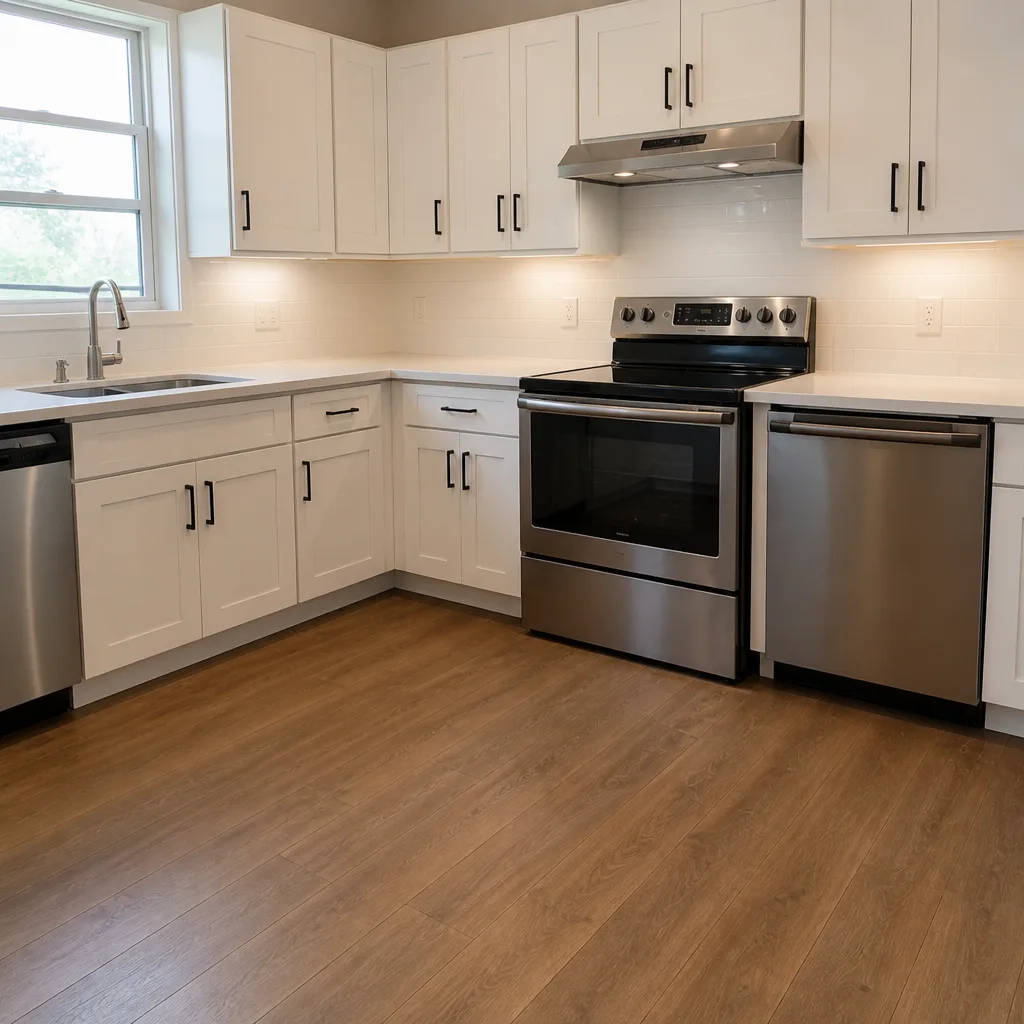
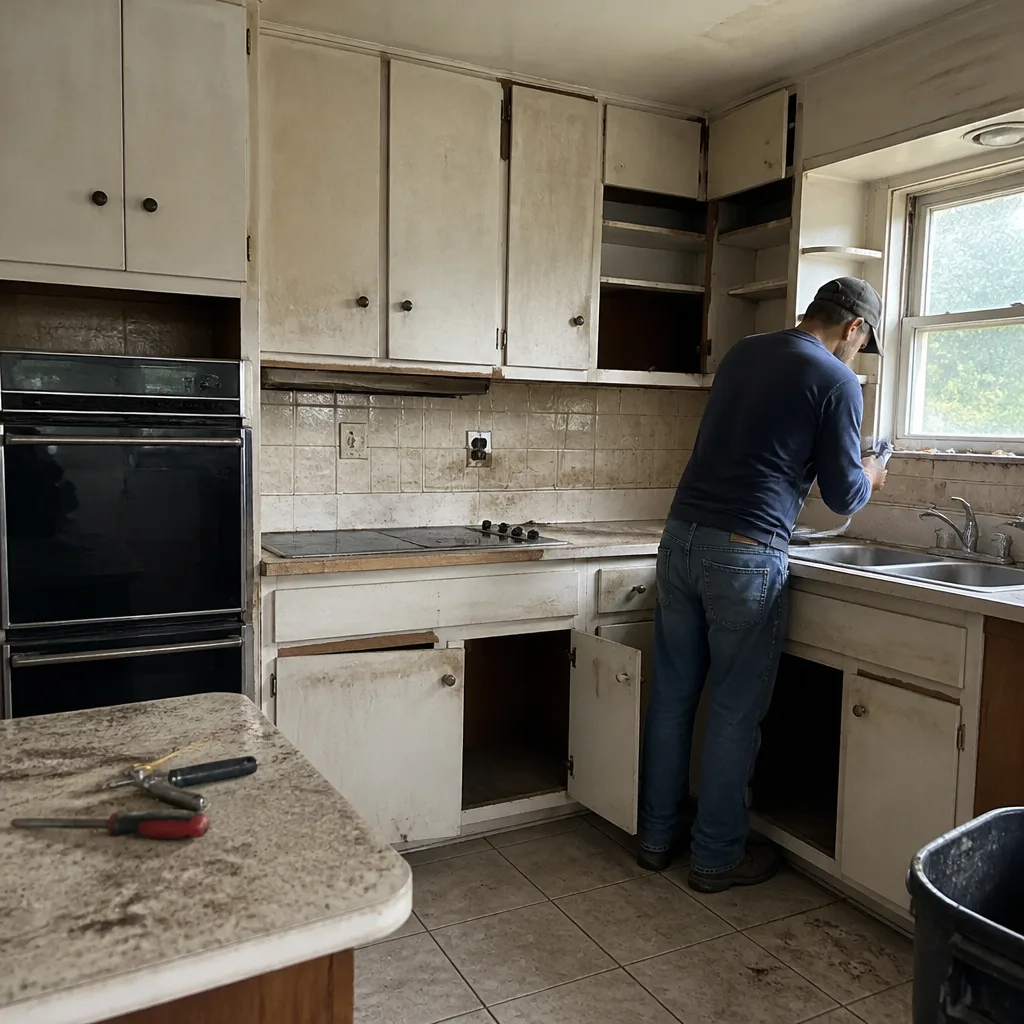
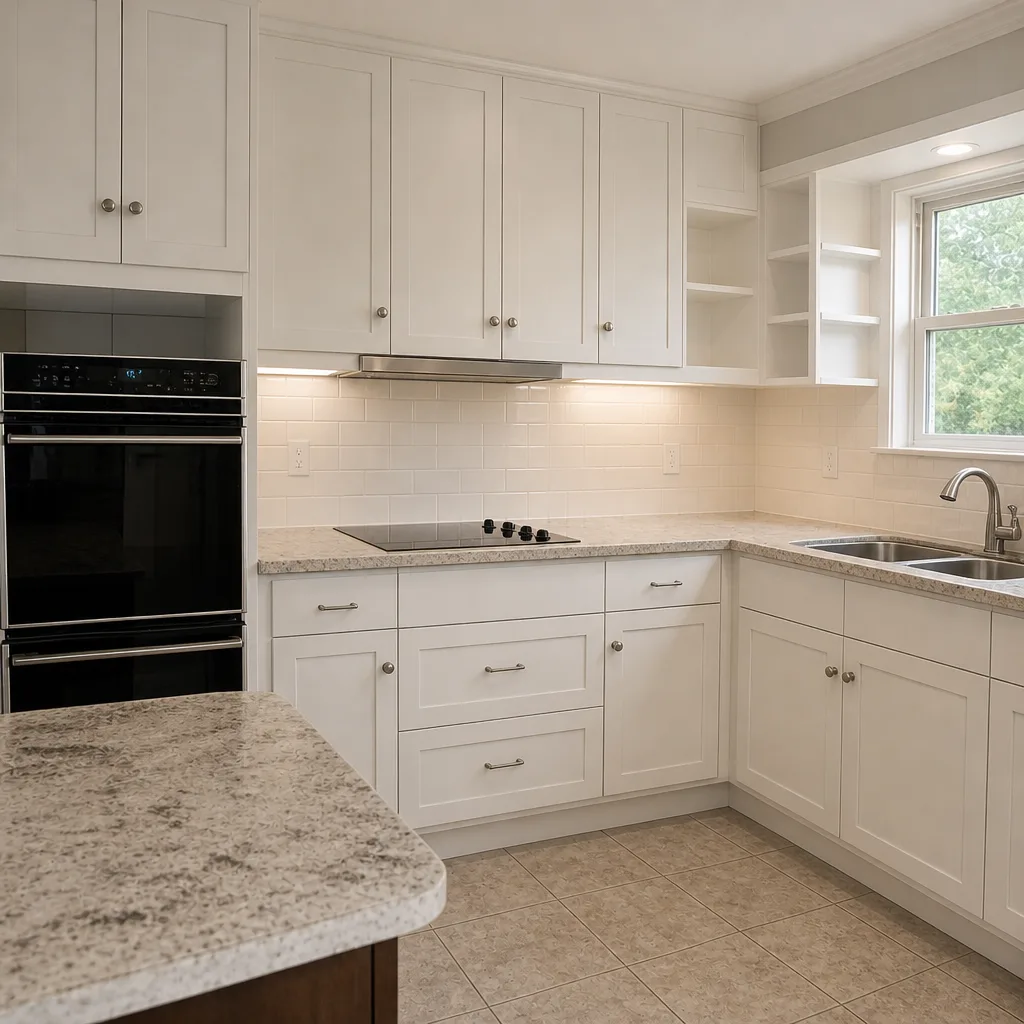
See the difference
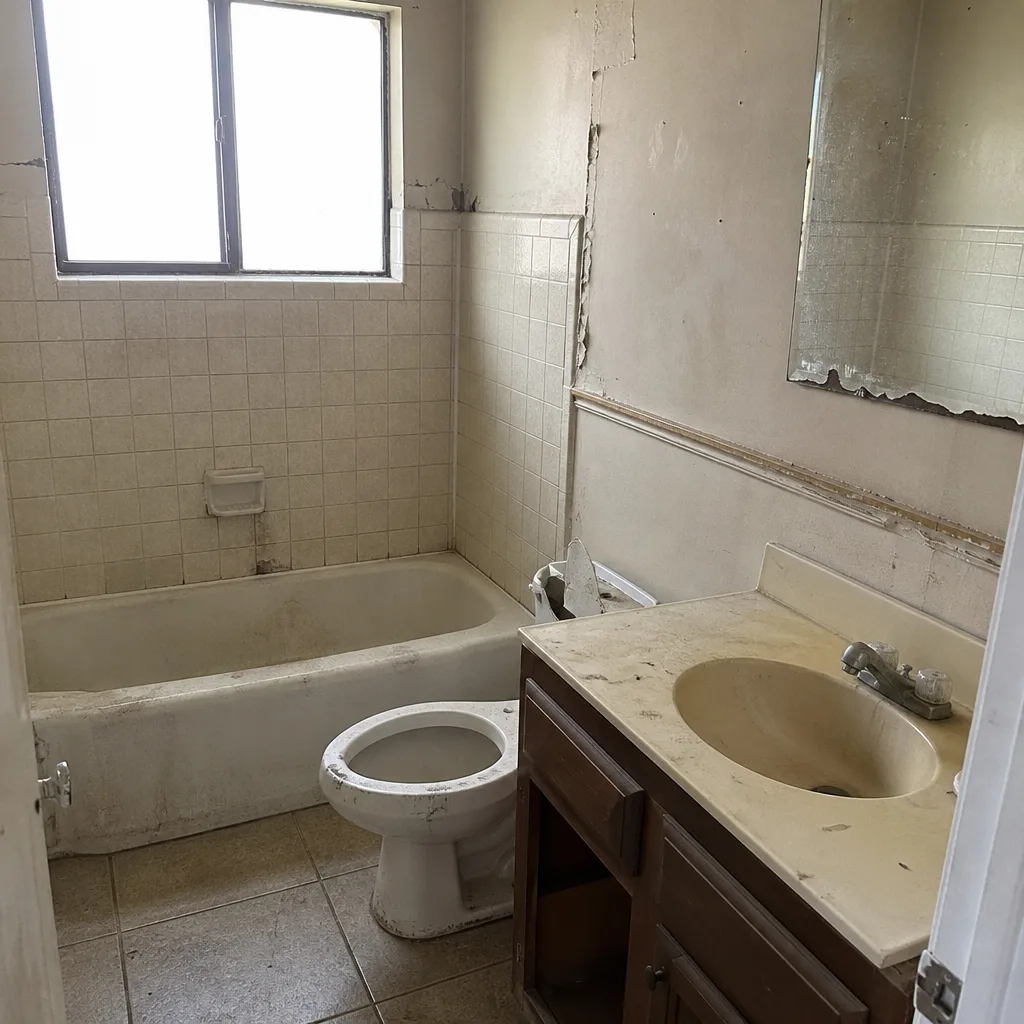 Before
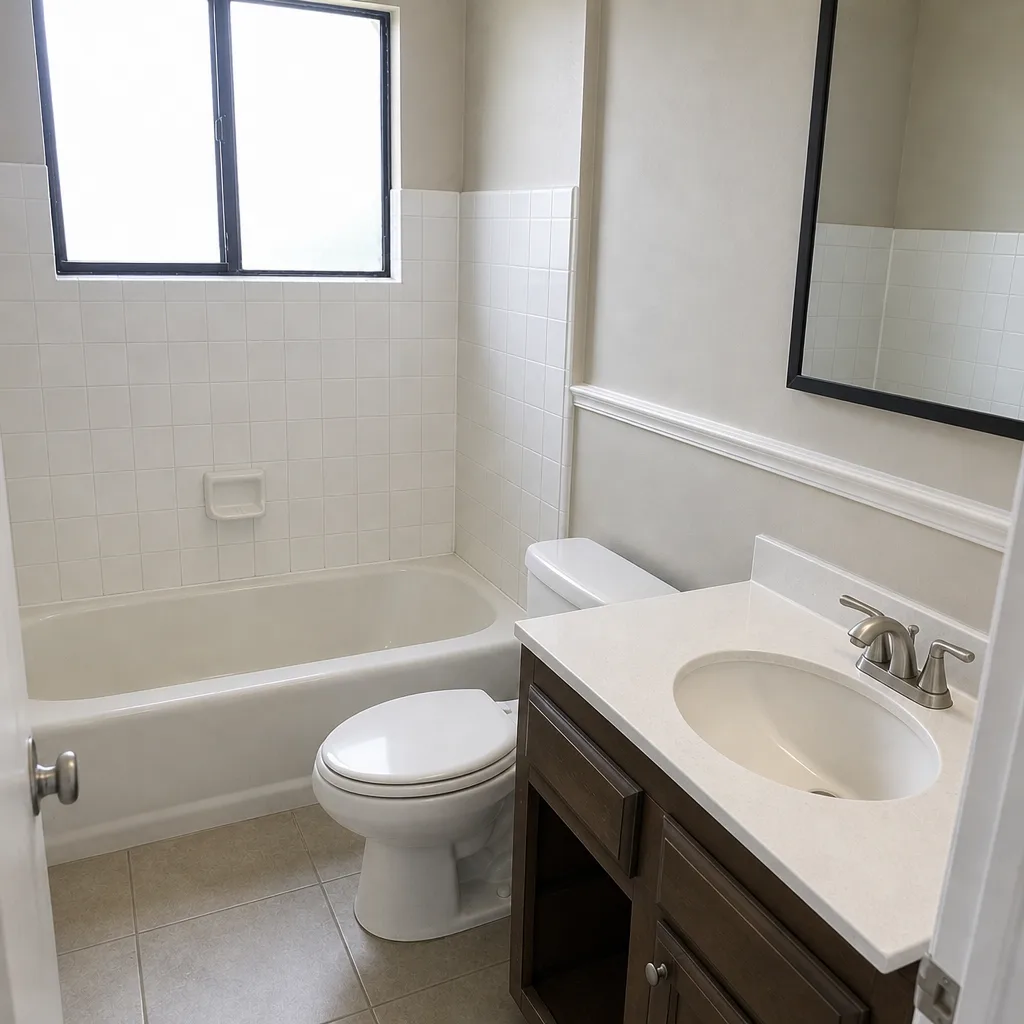 After
 Before
 After
 Before
 After
When to Call a Professional
Call a professional when a dip returns after a repair, when the settle depth is more than you can safely ignore, when the joints have opened because the pavers have spread, or when you can’t identify the cause of a stain. Those are the cases where diagnosis has real value, because the cost of treating the wrong thing is a second repair on the same spot. Call also if you’re planning a full replacement, or if the driveway is failing in more than one location at once, since that usually means a base or drainage issue that needs excavation to fix properly. A pressure-washer and a bag of joint sand are fine for healthy pavers. They’re not a diagnosis. Construction Carrollton offers free estimates in Carrollton, with written and itemized quotes, so the scope and the price are clear before anything comes out of the ground. Call (888) 584-9525. We answer 24/7. Fast dispatch from 7am to 7pm, Sunday through Friday. Our technicians have up to 14 years of experience, and the written estimate sets the final price.
Frequently Asked Questions
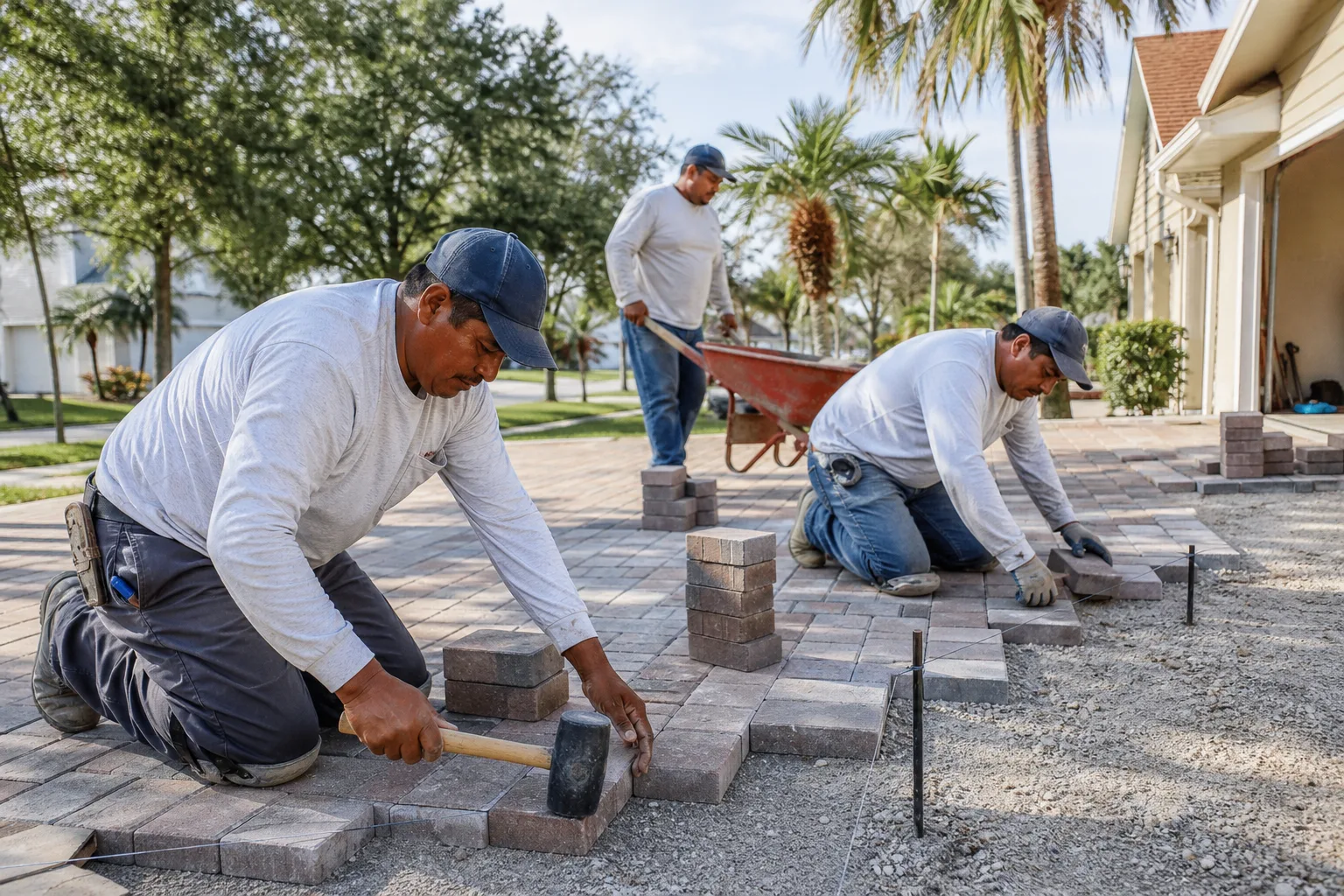
Paver repair in Carrollton is priced per job after diagnosis, so the answer depends entirely on whether the failure is at the surface or in the base. A joint-sand refill is a small, quick job. A localized section rebuild costs more because it involves excavation, base replacement, and re-laying, and a full or partial replacement runs highest. The written estimate sets the final price, and it’s free. Call (888) 584-9525 to schedule an on-site look and an exact quote.
Because the cause is under the pavers, not on them. A dip that returns in the same spot after a sand-and-level repair almost always points to a base or drainage failure in that specific location. Until the base is recompacted or the water redirected, the surface will keep settling back to where it was. The pattern of the sinking is what narrows down which one it is.
Polymeric sand is the right fix when the joints are clean, the pavers are stable, and the drainage is sound. It is not the right fix for a drainage problem or for pavers that have spread. In those cases it will hold for a season or two and fail. The product works; it just can’t solve a water problem for you.
Efflorescence is a white, chalky salt deposit pulled to the surface by water. Rust staining is orange or brown and comes from a metal source, furniture, or iron-rich water. They need different removers, and using the wrong one can damage the surface and void the manufacturer’s warranty. Identify the stain before you clean it.
Yes, at low pressure with the right cleaner. High pressure is the risk: it strips the surface finish, blows out joint sand, and can compromise a material warranty. A professional wash uses controlled pressure and manufacturer-approved products, which is why it’s worth asking how the wash will be done before it starts.
Permit requirements vary by scope and by the local building department, so the honest answer is to verify with the city before work begins. A simple like-for-like repair usually has different requirements than a full replacement or a change to the driveway width or drainage. We confirm what applies to your project as part of the estimate.
The Bottom Line
Read the pattern before you buy the fix. A returning dip near the garage or the street is a water problem. A widening settle in the middle is a base problem. Joint sand that won’t stay put is a drainage or an edge problem. On Carrollton’s clay soil, the same failure comes back within two seasons unless the cause is found first, and the surface remedy is the expensive way to learn that. Diagnosis comes first, and it’s cheap compared to a second repair on the same spot. Want to price out the fix the right way? Call (888) 584-9525 for a free estimate. We answer 24/7. Fast dispatch from 7am to 7pm, Sunday through Friday. You can also see the full scope of what we handle, from pavers to roofing, windows to fencing, through our other Construction Carrollton services. Written line-item quotes and a clear diagnosis are the starting point, not an upsell.
Written by the team at Construction Carrollton.