Last updated November 18, 2026



Free written scope consultation - allowances, timeline, and change-order rules on paper before a single trade is scheduled
Choosing the Right Construction Brand: A Buyer’s Guide for Carrollton
Most homeowners pick materials the way they pick a paint color: they look at samples, react to what they see, and trust the name on the box. That approach works for color. It fails badly for construction products. The roofing or siding product with the best national review score is not automatically right for a Carrollton home. Impact resistance rating, UV stability class, and thermal expansion coefficient are the specs that determine how a product performs here, and they’re rarely the numbers featured in a showroom. This guide shows you which specifications actually matter by trade, how to read warranty fine print that excludes North Texas claims, and why a short, curated brand list beats unlimited choice. You’ll leave knowing how to evaluate materials like an engineer, not a shopper.
Quick Answer
The right construction brand for a Carrollton home is the one whose published performance specs match North Texas conditions: an impact-rated, wind-uplift-tested roofing system, siding with a strong UV fade warranty and room for thermal movement, windows with a solar heat gain coefficient suited to sunny south and west exposures, and hardscape or fencing products rated for the local soil and sun. Choose a contractor who stocks a vetted brand list and can show you those specs side by side, not one who offers everything from every supplier.
Styles & brands we work with
- Kitchen remodeling
- Bathroom remodeling
- Home additions & ADU
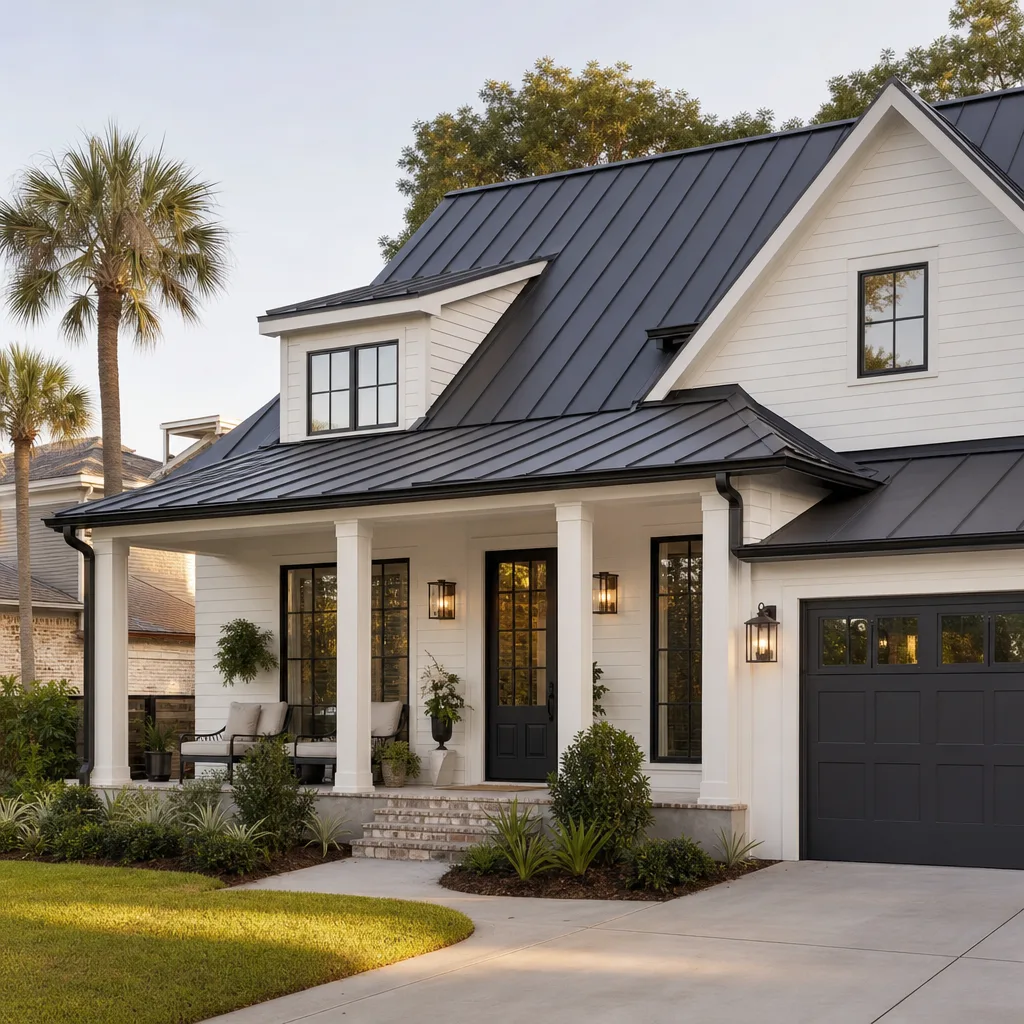
- Roofing
- Windows & doors
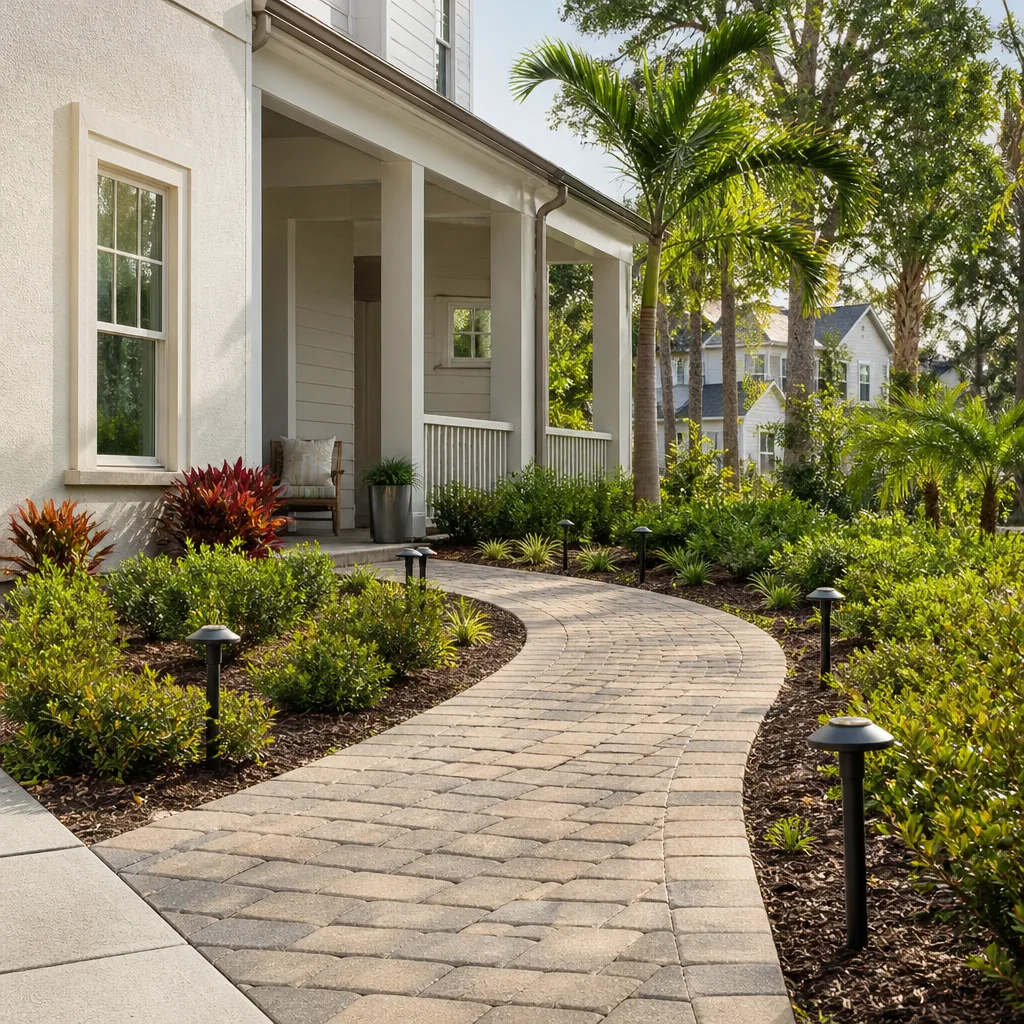
- Driveway & pavers
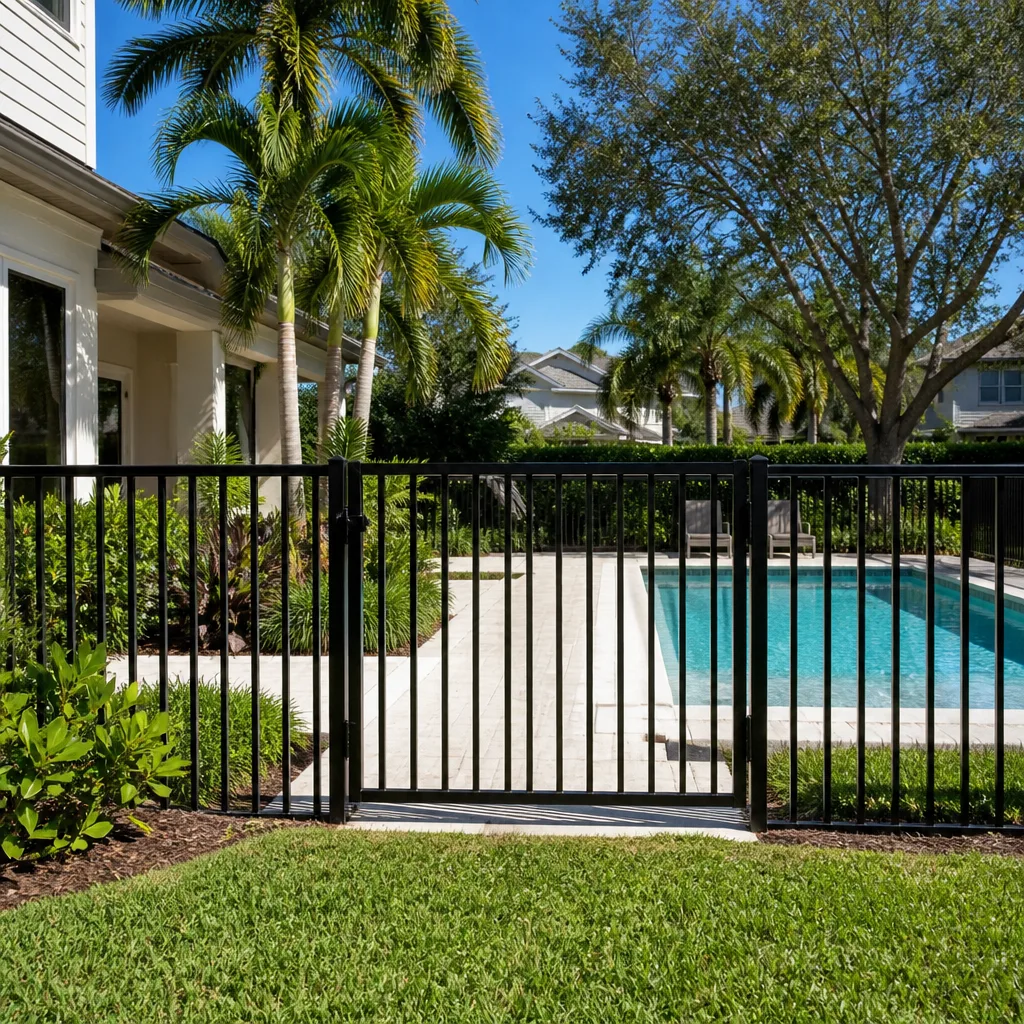
- Fence
Table of Contents
- Why Brand Selection Is an Engineering Decision in Carrollton
- Roofing: Impact Class and Wind Uplift Rating
- Siding: UV Stability and Thermal Movement
- Windows and Doors: Solar Heat Gain for South and West Walls
- How to Read Warranty Exclusions Before You Buy
- Builder-Grade, Contractor-Grade, Commercial-Grade: What the Tiers Really Mean
- Why a Curated Brand List Beats Unlimited Choice
- How to Verify Local Supply Before Work Starts
Why Brand Selection Is an Engineering Decision in Carrollton
A building product is designed for a set of conditions. Change the conditions and you change how long the product lasts. Carrollton sits in a climate with long, intense sun, hail events that arrive in a hurry, and clay-heavy soil that swells when wet and shrinks when dry. Those three forces – UV, impact, and soil movement – stress different parts of a home in different ways. A shingle that performs fine in a cooler, cloudier region can chalk and lose granules early under North Texas sun. A fence post set in shifting clay can lean within a couple of seasons no matter how good the panel is. None of that shows up in a national star rating.
Manufacturers know this. They publish the specs that matter – impact class, wind uplift, solar heat gain coefficient, UV warranty terms – but marketing leads with color palettes and curb-appeal photos, because that’s what sells at a glance. When we walk Carrollton homeowners through material options, we put the spec sheet next to the sample every time. The sample tells you how it looks. The spec tells you how it holds up.
There’s a second layer to this. Soil movement around Carrollton makes foundations and hardscape settle unevenly. A paver driveway installed with a professional-grade, interlocking system handles minor movement better than a commodity concrete pour, and the difference comes down to the product’s base design and joint system, not just the installer. That’s an engineering choice disguised as an aesthetic one.
- UV exposure: determines how fast siding, roofing, and fence finishes fade or chalk.
- Impact: decides whether a roof survives hail with cosmetic marks or real damage.
- Thermal movement: reveals whether siding and windows will buckle or seal correctly over seasonal swings.
- Soil movement: sets the bar for pavers, fence posts, and anything anchored to grade.
Every product decision for a Carrollton home should be checked against those four forces before it’s checked against the price tag.
Roofing: Impact Class and Wind Uplift Rating
Roofing is where the hailstorm question gets asked most, and it’s where the spec sheet earns its keep. Two numbers matter more than the brand’s national reputation: impact resistance class and wind uplift rating.
Impact Class
Shingle systems are tested and rated for impact resistance, and a product rated for higher impact absorbs hail strikes better than an entry-level shingle. When you compare GAF, CertainTeed, and Owens Corning, ask for the impact rating on the specific product line, not the brand as a whole. Every one of those manufacturers makes shingles across a range of impact performance.
Wind Uplift Rating
Wind uplift rating describes how much pressure a roofing assembly can resist before fasteners pull or edges lift. In a region with fast-moving storms, a system rated well above the local code minimum protects the edges and ridge, where failures usually begin. The rating depends on the whole assembly – underlayment, fasteners, and installation method – so a high-rated shingle nailed the wrong way loses its rating in the field.
- Ask for the impact rating and wind uplift rating on the exact product line, printed, not paraphrased.
- Confirm the warranty covers the full system, including underlayment and ventilation, not just the shingles.
- Check whether the manufacturer requires a specific underlayment or fastener to honor the warranty.
- Verify the installer will follow those requirements on your roof, in writing.
Carrollton hailstorms don’t announce themselves, so roof performance is settled the day it’s installed. Three of the most widely warranted shingle manufacturers in the industry are GAF, CertainTeed, and Owens Corning, and all three make systems that meet high impact and wind standards. The brand name is a starting point; the product line and installation are what hold up. If you’re pairing roof work with exterior upgrades, the same discipline applies to a driveway & pavers project, where the product’s base system determines longevity too.
Siding: UV Stability and Thermal Movement
Siding faces the sun all day in Carrollton, and that exposure is the difference between a finish that looks new after several seasons and one that fades, chalks, or warps. The two specs worth reading are UV fade warranty and thermal movement tolerance.
UV Fade Warranty
A fade warranty tells you how long the manufacturer will stand behind the color. The better products back their finish against fade for a set term, and the warranty language specifies what counts as fade. Look for the term in years, whether it’s prorated, and whether it covers labor to replace faded panels or only the material. James Hardie fiber-cement is widely used as a benchmark for durability and warranty coverage in exterior applications, and it’s a fair yardstick to compare other products against.
Thermal Movement Tolerance
Materials expand and contract as temperatures swing between a cool North Texas night and a hot afternoon. Products engineered with room for that movement hold their joints and seams. Products that aren’t can buckle, gap, or pull at fasteners. Fiber-cement handles this well; some vinyl products are more sensitive to it. Ask how the product is installed to allow for movement – that’s an installation detail that a manufacturer’s warranty often requires.
The tiers here matter too. Builder-grade siding is thinner and lighter, and while it can meet code, its fade warranty is usually shorter and its movement tolerance narrower. When a contractor opens a discussion about which siding to use, a strong UV warranty and a documented movement allowance are the two checkpoints that tell you it’s a contractor-grade or better product.
Windows and Doors: Solar Heat Gain for South and West Walls
A window is a mechanical system, not just an opening with glass. In Carrollton, the sun hits south and west walls hardest during the hottest part of the year, and that’s where solar heat gain coefficient (SHGC) decides how much heat your air conditioning has to fight. A lower SHGC means less solar heat enters through that glass.
- South and west exposures: choose the lowest SHGC you can while keeping the visible light you want.
- North and east exposures: a higher SHGC is acceptable because solar gain is lower.
- Impact-rated units: specialized manufacturers like PGT, CGI, and ECO Window Systems build products that combine storm performance with energy efficiency, and they carry published SHGC values so you can compare.
- Doors: Therma-Tru entry systems are a common contractor-grade choice, and the door’s insulation and glass rating matter the same way a window’s do.
There’s a specification step most buyers skip: match the window product to the wall it sits on. A single product across the whole house, chosen for average performance, underperforms on the west wall and overspends on the north. Window selection rewards a wall-by-wall look. And because window replacement often pairs with exterior work, it’s worth planning it alongside a broader exterior scope so the products coordinate. If your plans extend to a new structure, the same attention to product specs applies to a home additions & ADU project.
How to Read Warranty Exclusions Before You Buy
Two products can look identical on price and differ enormously in what their warranties actually cover. The fine print is not there to help you; it’s there to limit the manufacturer’s exposure. Reading it before you buy is the single most overlooked step in material selection.
What to look for in the fine print
- What counts as a defect: fade, chalking, and granule loss are often measured against a threshold. Find the threshold, not just the word.
- Excluded conditions: some warranties reduce coverage in high-wind or high-impact areas, or require specific installation methods that void coverage if skipped.
- Proration: many warranties pay less each year. A long term with heavy proration can be worth less than a shorter, fully covered term.
- Labor coverage: material-only warranties leave you paying to tear off and reinstall. Look for labor terms separately.
- Transferability: some warranties transfer to a new owner within a limited window; others don’t transfer at all.
- Voiding triggers: a roof or siding warranty often specifies underlayment, fasteners, and ventilation. Using different components voids it.
In Carrollton and across North Texas, the exclusions that cause the most trouble are installation-method requirements and impact-related fine print. A warranty written for a calm climate may not read the same way under frequent hail. The contractor should be able to point to the exact lines that apply here, and a written, line-item estimate should reference the warranty terms so there’s no argument later. Those warranty lines matter whether you’re choosing a shingle, siding, or a fencing system such as those from Master Halco, Ameristar, or Jerith.
Builder-Grade, Contractor-Grade, Commercial-Grade: What the Tiers Really Mean
The tier labels – builder-grade, contractor-grade, commercial-grade – aren’t marketing fluff. They describe real differences in material thickness, durability, and warranty depth. The failure patterns differ by tier, and they show up in different ways under DFW conditions.
Builder-grade
Made to meet code at the lowest material cost. Under Carrollton sun, builder-grade siding chalks sooner, builder-grade windows can have higher heat gain and weaker seals, and builder-grade fencing posts lean earlier in clay soil. It can be the right product for a rental or a short-term hold. It’s rarely the right product for a homeowner planning to stay.
Contractor-grade
Built with real material and warranty depth, engineered to perform under normal residential use. This is the tier where a home gets a fair, durable product at a sensible cost. Products like James Hardie fiber-cement and the major shingle systems from GAF, CertainTeed, and Owens Corning sit here at their better product lines.
Commercial-grade
Built for high traffic, heavy use, and stricter warranty standards. In fencing, commercial-grade systems from Master Halco, Ameristar, and Jerith are the same brands specified for commercial and high-security projects. In hardscape, professional-grade paver systems from Belgard, Unilock, Techo-Bloc, and Cambridge Pavers perform far better than commodity concrete because the base and joint systems are engineered.
The practical lesson: match the tier to the job. You don’t need commercial-grade everywhere, but on any surface that takes sun, impact, or soil movement, moving up from builder-grade pays for itself. A product spec sheet stops being abstract the moment you’re choosing what to live with for years.
Why a Curated Brand List Beats Unlimited Choice
Homeowners often assume more brand options is better. In construction, the opposite is frequently true. A contractor who offers everything from any supplier is a conduit, not a filter. A contractor who stocks a limited, vetted list has already done the spec-matching work, and that changes the outcome.
Here’s why a curated list outperforms unlimited choice:
- Proven performance in the local climate: a brand earns its place on the list by holding up under North Texas UV, hail, and soil movement, not by winning a national award.
- Consistent supply: a short list means the contractor knows which distributors stock it, so a mid-build substitution doesn’t happen.
- Installation fluency: technicians who install the same product lines repeatedly follow the manufacturer’s method correctly, which is what keeps the warranty valid.
- Honest warranty backing: a contractor who knows how a manufacturer handles claims steers you away from product lines that are hard to warranty.
A curated list that spans 50+ vetted material brands across the trades – from Cambria, Caesarstone, and Silestone countertops to KraftMaid and Wellborn cabinetry to Kohler, Moen, Grohe, Toto, and American Standard plumbing fixtures – gives you real options without the paralysis of endless suppliers. That’s the model we use: name the brands specifically, match them to the spec, and walk you through the material options so the choice is yours. If a brand isn’t on the list, there’s a reason, and we’ll tell you what it is. The same filtering applies to a fence installation, where commercial-grade panel and post specs drive how long the fence stands against sun and shifting clay.
How to Verify Local Supply Before Work Starts
Supply chain gaps are one of the quietest reasons projects go sideways. A brand that looks perfect on a spec sheet is useless if the local distributor can’t get it in consistent quantities, because a mid-build substitution at the last minute forces a compromise the homeowner didn’t choose.
A short supply check you can run
- Confirm the local distributor: ask which distributor in the Carrollton area stocks the product, not just the national manufacturer.
- Ask about stock consistency: whether the product line is regularly stocked or special-ordered, and what the lead time is.
- Check the substitution policy: what happens if the product runs short mid-project, and who approves a substitute.
- Get it in writing: the written estimate should name the product and product line so a substitution is a change order, not a surprise.
- Verify warranty validity on the installed system: the components used shouldn’t void the manufacturer’s coverage.
Soil and weather aren’t the only forces that hurt a project. A delayed railing, a discontinued shingle color, a backordered window – each forces a choice under deadline. The way to avoid that is to settle supply before the first nail goes in. For prefab structures, this matters even more: a prefab ADU from Abodu, Dvele, Mighty Buildings, Boxabl, or Plant Prefab depends on a coordinated delivery, and the local supply chain for site work, utilities, and finishing has to line up with the factory schedule. Getting the supply check done early is how projects stay on a single contractor, one accountable point.
Common Mistakes to Avoid
- Choosing by color and showroom feel. A product that looks great on a sample board tells you nothing about how it handles UV, impact, or movement. Read the spec sheet first.
- Comparing brands instead of product lines. Every major manufacturer makes a range of shingles, siding, and windows. The line matters more than the logo on the box.
- Ignoring warranty exclusions. Fine print on installation method, underlayment, and impact coverage can void a claim after installation. Read it before you buy.
- Substituting at the last minute. A backordered product forces a compromise you didn’t choose. Verify local supply before work starts.
- Letting one product across every exposure. South and west walls in Carrollton get more solar heat. Match windows, and their SHGC, to the wall and the light.
- Assuming a big national name is a safe default. The best-rated roof nationally may not be the best-rated roof for hail frequency and North Texas sun. Match the product to the place.
- Choosing a product with no local service backing. A manufacturer without a local distributor makes replacement parts and warranty service slow, and in Carrollton’s climate that gap is felt on the roof or the fence first.
See the difference
 Before
 After
 Before
 After
 Before
 After
When to Call a Professional
Some material decisions are simple. Others carry real risk if you guess wrong. It’s time to involve a professional when you’re choosing a roofing system and can’t tell the impact and wind ratings apart, when you’re replacing windows on south or west walls and aren’t sure the SHGC fits the exposure, when you’re installing hardscape over shifting clay and need the base system right, or when a warranty’s fine print leaves you unsure whether a claim will hold. Height work, roof work, and electrical or structural integration carry their own hazards, so those belong with trained technicians regardless. Construction Carrollton offers free estimates in Carrollton, with a written line-item quote and the product spec laid out beside the price. Call (888) 584-9525 to schedule yours.
Frequently Asked Questions
There’s no single best brand; the right pick is the product line whose published specs match North Texas conditions. For roofing, look at impact and wind uplift ratings from GAF, CertainTeed, or Owens Corning. For siding, check UV fade warranty and thermal movement, with James Hardie fiber-cement as a common benchmark. For windows, match solar heat gain to the exposure with PGT, CGI, or ECO Window Systems. Call (888) 584-9525 for a free estimate and we’ll walk you through the specs side by side.
Focus on what counts as a defect, the excluded conditions, proration terms, labor coverage, whether it transfers, and the installation-method triggers that void it. Hail and impact clauses are the most common source of trouble here. The written estimate should reference the warranty terms that apply to your project. Call (888) 584-9525 for an exact quote – estimates are free.
Builder-grade material meets code and can suit a rental or short-term hold, but under Carrollton sun it chalks, fades, and settles sooner than contractor-grade or commercial-grade. For a home you plan to keep, contractor-grade products perform far better against UV, impact, and soil movement. Call (888) 584-9525 to compare tiers for your project.
A short, vetted list means the contractor has already matched products to the local climate and knows which distributors stock them consistently, which prevents mid-build substitutions. It also means technicians install the same product lines repeatedly and keep warranty coverage valid. Call (888) 584-9525 to see the brands we install.
Ask which distributor in the Carrollton area carries it, whether it’s regularly stocked or special-ordered, the lead time, and the substitution policy if it runs short. Get the product line and name in the written estimate so a swap is a change order. Call (888) 584-9525 for a free estimate.
Yes, when both are part of the same exterior scope, because the window’s solar heat gain coefficient and the siding’s thermal movement both depend on the wall they face and how they fit together. Coordinating them avoids rework and keeps the warranty intact. Call (888) 584-9525 to plan the exterior as one project.
The Bottom Line
Brand selection for a Carrollton home is an engineering decision, not a showroom one. Impact class and wind uplift rating decide how a roof handles hail. UV fade warranty and thermal movement decide how siding holds up to North Texas sun. Solar heat gain coefficient decides how hard your windows make your air conditioning work. Worker product tiers – builder, contractor, and commercial – describe real differences in material and warranty depth, and the fine print on a warranty is where coverage is won or lost. A curated brand list and a verified local supply chain protect you from substitutions, and the written estimate sets the final price. Call (888) 584-9525 for a free estimate. We answer 24/7, with fast dispatch from 7am to 7pm, Sunday through Friday.
From the driveway to the roofline, Construction Carrollton handles interior remodels and exterior transformations with one accountable contractor, stocking and installing from a curated list of industry-leading material brands. Our technicians have up to 14 years of experience. We’ll walk you through the material options and put the spec next to the sample, so you can choose for the climate you actually live in. Start your material consultation with a call to (888) 584-9525.
Written by the team at Construction Carrollton.