
Last updated November 18, 2026







Free written scope consultation - allowances, timeline, and change-order rules on paper before a single trade is scheduled
Construction Warning Signs: A Carrollton Homeowner’s Reference Guide
The crack a homeowner notices first is rarely the first sign of trouble. It is usually the last one in a chain of events that started months or years earlier, quietly, somewhere nobody was looking. That is the core idea behind this guide: most visible construction problems in Carrollton homes are lagging indicators, and the earlier signals are almost always cheaper to act on. The stair-step crack climbing a brick facade gets dismissed as “just settling,” yet in clay-soil zones it’s one of the most reliable early markers of foundation movement. What separates a modest repair from a major one is usually how many seasons passed before anyone acted. Below, we walk through what to look for, how to tell cosmetic from structural, and how to sort the urgent from the patient.
Quick Answer
Construction warning signs in a Carrollton home fall into four buckets: foundation movement (stair-step brick cracks, sticking doors, gap patterns around frames), moisture intrusion (attic staining, soft fascia, grading that slopes toward the house), material failure (curling shingles, cracked caulk lines, deteriorating fence posts), and workmanship problems visible during an active project. The single most useful skill is telling cosmetic cracks from structural ones using width, orientation, and location – and knowing which signs allow a 90-day window versus which need a call within the week.
Styles & brands we work with
- Kitchen remodeling
- Bathroom remodeling
- Home additions & ADU
- Roofing
- Windows & doors
- Driveway & pavers
- Fence
Table of Contents
- Quick Answer
- Cosmetic vs. Structural Cracks: How to Tell the Difference
- Exterior Warning Signs Unique to Carrollton’s Clay Soil
- Reading Moisture Intrusion in Carrollton Attics During Summer
- Warning Signs in Contractor Workmanship During an Active Project
- The Triage Framework: 90-Day Window vs. Call This Week
- Material Failure Signals by System
- Common Mistakes to Avoid
- When to Call a Professional
- Frequently Asked Questions
Cosmetic vs. Structural Cracks: How to Tell the Difference
Crack width is the first filter, but it is not the whole story. A hairline crack is almost always cosmetic; a crack that has widened past the thickness of a nickel, or one that keeps growing, deserves a professional look. Orientation matters just as much. Vertical cracks in drywall, especially above door and window corners, are often shrinkage or minor settling. Diagonal cracks that run from a corner of an opening toward the ceiling or floor are the ones that tell you something in the structure is moving. Stair-step cracks in brick or block, where the crack follows the mortar joints in a diagonal staircase pattern, are the classic foundation movement signature.
Location changes the diagnosis entirely. A crack in the middle of a large drywall span with no opening nearby is usually benign. The same width crack radiating from the corner of a window or door frame, where stress concentrates, is worth investigating. Cracks that appear on both the interior and exterior at the same spot are more significant than an interior-only line. And a crack that was patched a year ago and has re-opened is telling you the movement is ongoing, not historic.
Here is how we sort them in the field:
- Under 1/16 inch, vertical, isolated: cosmetic – monitor it, note the date with a pencil mark.
- 1/16 to 1/8 inch, diagonal from an opening: early movement – get it looked at within a season.
- Over 1/8 inch, or stair-step in masonry: structural signal – call within the week.
- Any crack that re-opens after repair: active movement – call now.
None of this replaces an in-person assessment, but it lets you triage before you spend money on one. If you’re planning a larger Construction Carrollton project, a foundation question is the first thing to settle before any cosmetic work begins.
Exterior Warning Signs Unique to Carrollton’s Clay Soil
Carrollton sits on expansive clay soils, and clay does one thing extremely well: it swells when wet and shrinks when dry. That seasonal expansion and contraction is the engine behind most foundation movement in the area, and it shows up on the exterior weeks or months before it shows up inside. The trick is knowing which exterior patterns are the early ones.
Start with the door and window frames. A gap that opens at the top corner of a door frame, where the door no longer meets the jamb squarely, is a foundation signal. So is a window that suddenly sticks or won’t latch. Look at the gap pattern around the frame: a uniform gap all the way around is usually fine, while a wedge-shaped gap (wide at one corner, tight at the opposite) points to the wall moving. That wedge is the early indicator; the stuck door is the late one.
Then look at the fascia and soffit along the roofline. Where the fascia board separates from the wall, or a gap opens between the fascia and the brick, the wall below may be moving independently of the roof structure. On the ground, watch the grading: soil that has settled and now slopes toward the foundation, or a swale that has flattened out, sends water against the house instead of away from it. Positive drainage away from the foundation is one of the cheapest forms of protection a homeowner has.
We’ve seen these signs in every corner of Carrollton, from older neighborhoods around downtown to newer builds on the city’s edges. The point isn’t to alarm you – it’s that the exterior tells you first. If your exterior surfaces themselves are failing (cracking pavers, lifting driveway sections), that’s a separate driveway & pavers conversation, but the drainage and grading findings belong to the same evaluation.
Reading Moisture Intrusion in Carrollton Attics During Summer
Carrollton summers are hard on attics: hot, humid, and long. That combination turns a small roof or ventilation problem into a moisture problem faster than most homeowners realize. The warning signs in the attic are not the ones you see from the yard – they’re the ones you find with a flashlight, and the technique matters.
Look at the wood, not the insulation, first. Water stains on rafters or sheathing show up as a tide-line, a dark ring where moisture pooled and dried repeatedly. Fresh staining is a current leak; a tide-line that stops short of the current roofline is likely a repaired or old issue. Then check the sheathing on the underside of the roof deck, especially near the ridge and around any penetration (vents, chimneys, plumbing stacks). Rusted nail tips poking through the deck are a quiet, reliable moisture tell – the nails conduct cold and condense before the wood shows anything.
Down in the insulation, look for compressed or matted batts, which signal a leak above, and for the smell of damp fiberglass. Along the attic floor near the eaves, look for daylight or staining at the top plate. But the most useful summer check is ventilation: if you can feel hot, humid air sitting in the attic and it doesn’t move, the moisture from living space below has nowhere to go. Poor ventilation and a small roof leak together are what turn into a much bigger problem.
A short attic walk-through is a reasonable thing to do yourself with a flashlight. What you should not do is climb onto a steep, hot roof surface to check it – that’s a fall hazard, and the best information about a roof is gathered from below, from the attic and the ground. When roofing systems on Carrollton homes need attention, the signals that matter most are the ones a trained eye reads in the attic and at the roof edge, not the ones you’d see from the ladder.
Warning Signs in Contractor Workmanship During an Active Project
The damage from a poorly executed project is often hidden behind drywall before the homeowner ever sees it. That makes the warning signs *during* the work worth knowing – they’re the last chance to catch a problem before it’s covered up. These are visual and behavioral, and they tend to show up together.
On the visual side, look for these:
- Materials substituted without a conversation. If the brand or grade changes and nobody tells you, that’s a red flag. A vetted project uses specified materials – if the plan called for a particular cabinet line or countertop, the delivered material should match.
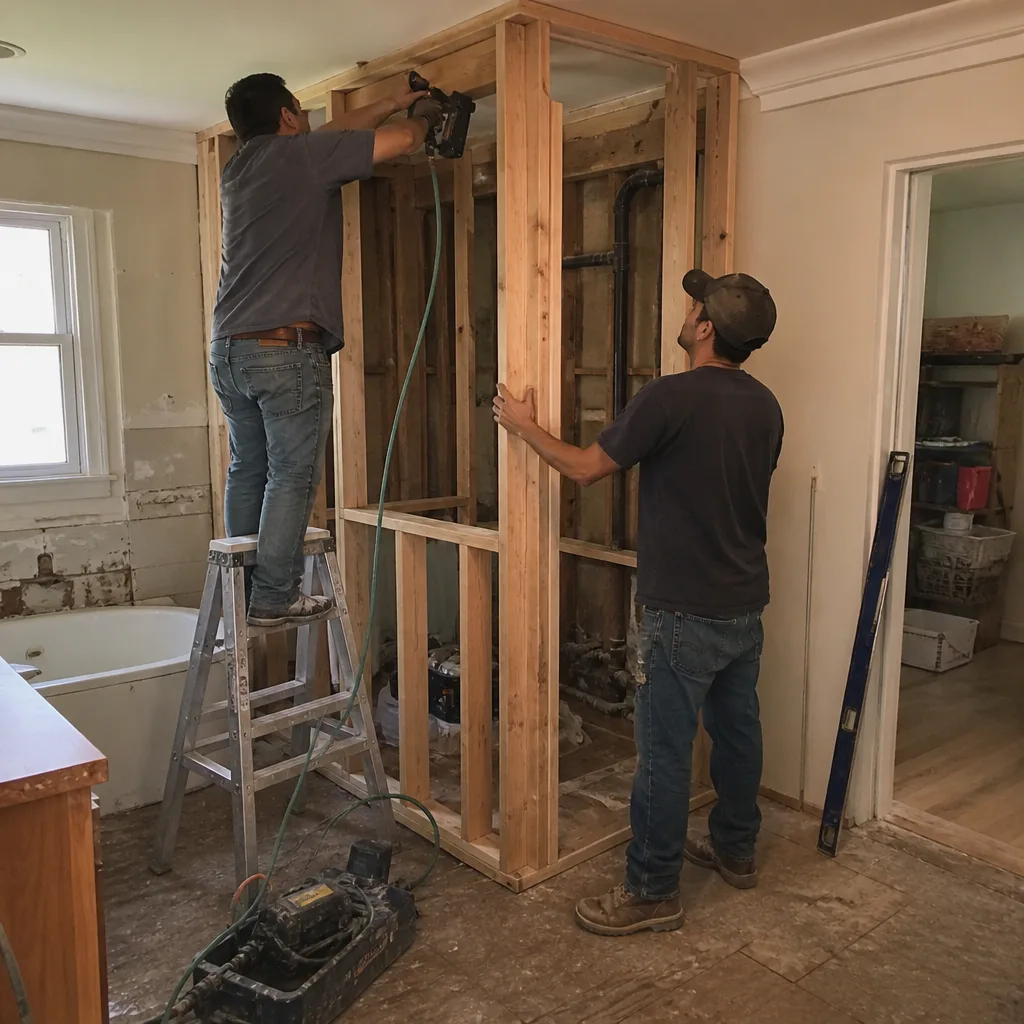
- Cut-and-hope framing. Notches, gaps, or splices in framing that don’t look intentional, especially around openings and load paths, are a sign the crew is improvising.
- Waterproofing skipped or spotty. In a bathroom, the waterproofing layer is the thing you’ll never see again. If it’s not visible, ask to see it before tile goes in.
- Inconsistent joints and lines. Out-of-plumb walls, uneven tile spacing, or trim that doesn’t line up tells you the layout wasn’t checked before installation.
On the behavioral side, the strongest signal is communication. A contractor who goes quiet mid-project, avoids your questions, or can’t produce a written scope or change order is telling you something. The best projects have a clear material list, a schedule of what happens next, and a reason for every change. That’s why material selection deserves its own conversation – when a plan names specific products like Kohler or Moen fixtures, Blanco sinks, or Delta faucets, everyone knows what’s being installed and there’s less room for substitution. If you are weighing a home additions & ADU project, this is doubly true because more of the work gets covered up.
The Triage Framework: 90-Day Window vs. Call This Week
Not every warning sign is an emergency, and treating them all that way leads homeowners to either panic or ignore everything. Here is how we think about urgency, with the honest reasoning behind each call.
Signs that allow a 90-day response window
- Hairline cosmetic cracks that are new but haven’t grown after marking them.
- A slightly sticking door or window that opens with normal force – seasonal clay movement often reverses.
- Exterior caulk or sealant failure around windows, which is a weatherproofing issue before it’s a structural one.
- Poor attic ventilation with no active staining – plan the fix, don’t rush it.
- Aged but intact fencing or exterior trim that’s due for replacement but not failing.
The reasoning: these are developing issues, and a 90-day window lets you plan the work, get material options, and schedule it properly rather than paying for a rushed call. If your fencing is the item on the list, a proper fence installation planned in advance is always better than one forced by a collapse.
Signs that warrant a call within the week
- Stair-step cracks in masonry that are growing or re-opening.
- A wedge-shaped gap at a door or window frame that’s recently appeared.
- Active water staining in the attic or a roof leak that shows up in rain.
- Soft fascia or soffit you can press into with a finger.
- Any crack that re-opens after a repair.
The reasoning: these are active failures. Every rain cycle or season of movement makes the eventual repair larger, and the difference between a small fix and a large one is usually time, not severity. When in doubt, err toward the earlier call – an assessment costs far less than the repair it may prevent.
Material Failure Signals by System
Every system in a home fails in its own way, and knowing the signature of each helps you catch it before it spreads. Here are the ones we look at first on a Carrollton home.
- Roofing: curling or missing shingles, granules in the gutters, and dark streaks are the visible signs; the attic signs above are the deeper ones. Roofing systems from GAF, CertainTeed, and Owens Corning carry warranties worth knowing about, and failure often starts at the penetrations and valleys, not the field.
- Windows and doors: fogging between panes, drafts, and sticking are early signs. Impact-rated and energy-efficient windows are worth considering for upgrades, but the warning sign is always the same: a unit that no longer seals.
- Pavers and hardscape: lifting, rocking, or joint sand washing out signals a base problem, not a surface one. Professional paver systems from Belgard, Unilock, Techo-Bloc, and Cambridge Pavers are built differently than commodity concrete, and the failure patterns reflect the base, not the block.
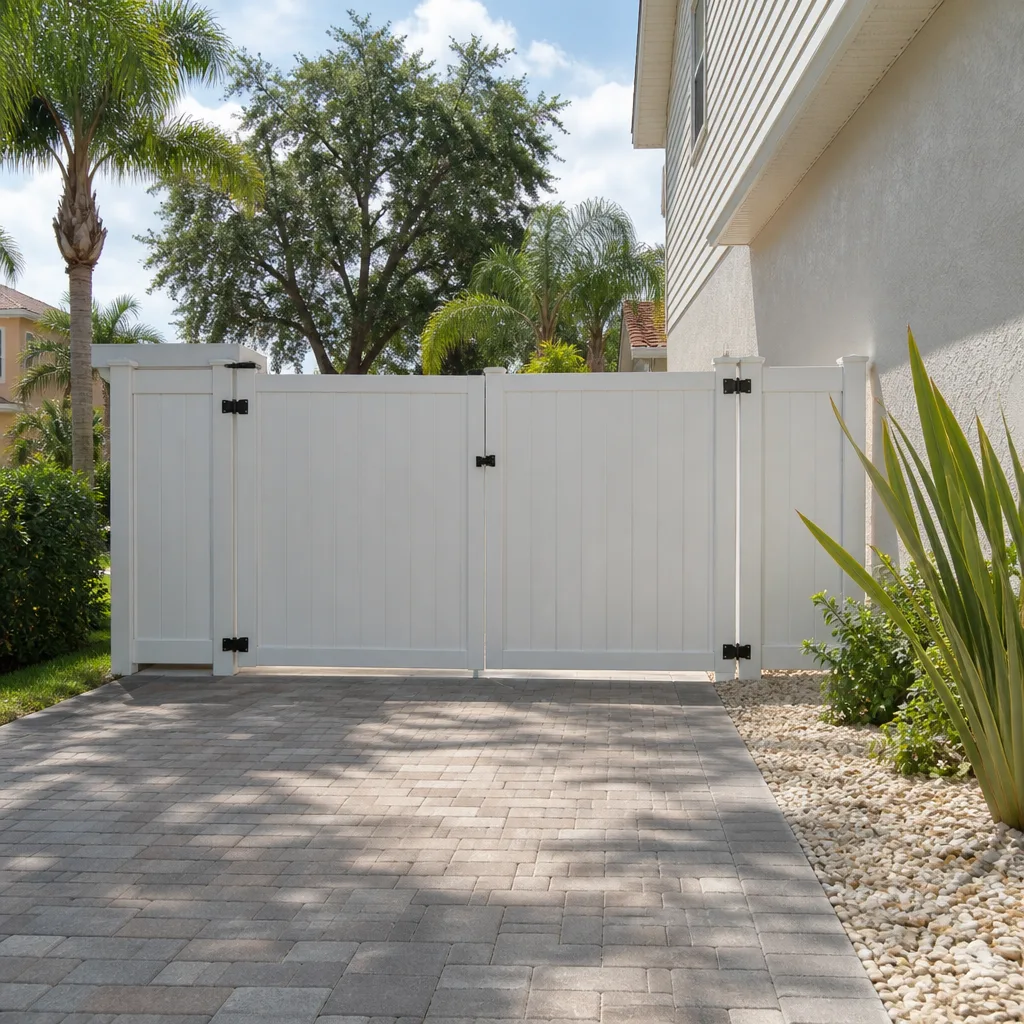
- Fencing: leaning posts, loose hinges, and rot at the base are the tell. Commercial-grade fencing from Master Halco, Ameristar, and Jerith holds up better, but any fence fails at the post first.
- Exterior cladding and trim: James Hardie fiber-cement is the benchmark for durability, and failure there usually means installation or sealing, not the material.
- Kitchen and bath fixtures: drips, mineral staining, and loose connections are the early signals; a small fixture leak becomes a cabinet and subfloor problem quietly.
When you’re replacing a failing system rather than patching it, the material choice determines how the next ten years go. That’s where access to real options across categories – not whatever is in stock – matters.
Common Mistakes to Avoid
- Painting over a re-opening crack. Cosmetic cover-up hides the signal the structure is trying to send, and the movement continues behind the fresh paint. Mark the crack and watch it before you patch.
- Treating clay-soil movement as random. In Carrollton, doors that stick in one season and free up in another are telling you the clay is moving. Ignoring the pattern means the eventual foundation work gets bigger.
- Letting grading slide. Soil that settles and slopes toward the house sends water against the foundation. Fixing the grade is one of the cheapest defenses there is, and most homeowners skip it.
- Choosing materials on price alone. Builder-grade substitutes in a system you plan to keep look cheaper up front and cost more later. Specify the product, not just the category.
- Signing a scope that names no products. If the plan says “countertops” instead of a named line like Cambria or Silestone, you’ve left the decision to whoever shows up with a truck.
- Ignoring the attic until it rains. A summer attic check catches moisture and ventilation problems before they turn into ceiling stains and rot.
- Waiting on active failures. A growing masonry crack or a fresh attic stain doesn’t improve with time. The week you wait is often the difference between a small repair and a large one.
When to Call a Professional
Call a professional when a warning sign crosses from cosmetic to structural, when you can’t tell which it is and the pattern is changing, or when water is actively getting into the building. Specifically: stair-step masonry cracks, wedge-shaped frame gaps, active attic staining, soft fascia or soffit, any crack that re-opens after repair, and any workmanship signal during an active project that nobody can explain in plain language. A trained assessment early is worth far more than a repair that could have been avoided. The same applies to a project you’re about to start: settling the structural questions before cosmetic work begins saves time and money.
We offer free estimates in Carrollton and can walk you through the signs, the material options, and the sequence. Call (888) 584-9525. We answer 24/7. Fast dispatch from 7am to 7pm, Sunday through Friday.
Frequently Asked Questions
A crack wider than about 1/8 inch, or one that is stair-stepped in brick and block, is the threshold where we recommend a professional look. Width is one filter, but orientation and location matter just as much – a diagonal crack radiating from a window corner is more significant than the same width isolated in a large wall span. Call (888) 584-9525 for an exact assessment – estimates are free.
Expansive clay soil swells when wet and shrinks when dry, so walls move seasonally and the movement often reverses. That pattern explains doors that stick in one season and free up in another, and hairline cracks that appear and close. It doesn’t make the pattern harmless, though – repeated movement of the same spot is the signal worth watching. Call (888) 584-9525 if a crack keeps returning to the same place.
Look for water stains and tide-lines on rafters and sheathing, rusted nail tips poking through the deck, compressed or damp insulation, and hot humid air that isn’t moving. Those are the moisture and ventilation signals that appear before a ceiling stain shows up. A flashlight walk-through from below is safe; don’t climb onto a hot roof. Call (888) 584-9525 to have a roof or attic concern checked properly.
Yes – the signals are usually visible during the work, not after. Watch for material substitutions nobody mentioned, framing that looks improvised, waterproofing you can’t see before tile goes in, and inconsistent lines. Add the behavioral ones: silence mid-project, no written scope, and no clear reason for changes. Call (888) 584-9525 to talk through a project that’s raising questions.
If the soil has settled and the surface now slopes toward the house, or a swale has flattened out, water is heading the wrong way. That’s an early signal, and it’s one of the cheapest to correct. The drainage pattern belongs in the same conversation as the foundation itself. Call (888) 584-9525 to have the exterior evaluated.
No. Most warning signs point to a single system or a single area, and catching them early is exactly what keeps the fix small. The triage framework above separates signs that allow a 90-day window from signs that need a call within the week. When a growing masonry crack or active attic leak is on your list, call (888) 584-9525 – estimates are free.
The Bottom Line

The signs that matter most are the ones that show up before the crack does: the wedge-shaped gap around a door frame, the grading that now slopes toward the foundation, the rusted nail tips in the attic, the substituted material nobody mentioned. Carrollton’s clay soils make the exterior the place to look first, and the summer attic check catches moisture before it becomes a repair. Every warning sign on this list falls into one of two buckets – a 90-day window or a call this week – and the honest work is knowing which is which. Catching the early signal is always the lower-cost path.
Start with a free estimate and a material consultation through Construction Carrollton. Call (888) 584-9525. We answer 24/7. Fast dispatch from 7am to 7pm, Sunday through Friday, and our technicians have up to 14 years of experience reading exactly these signals.
Written by the team at Construction Carrollton.
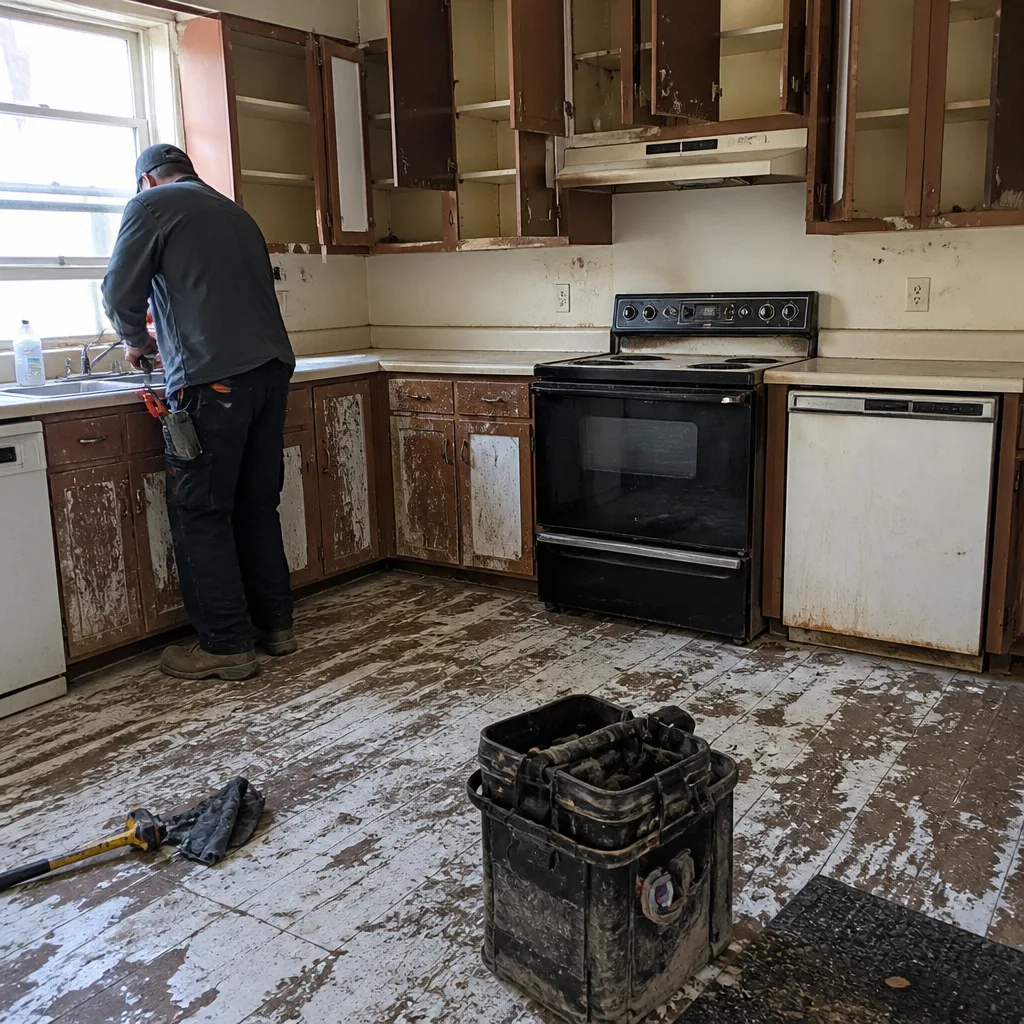
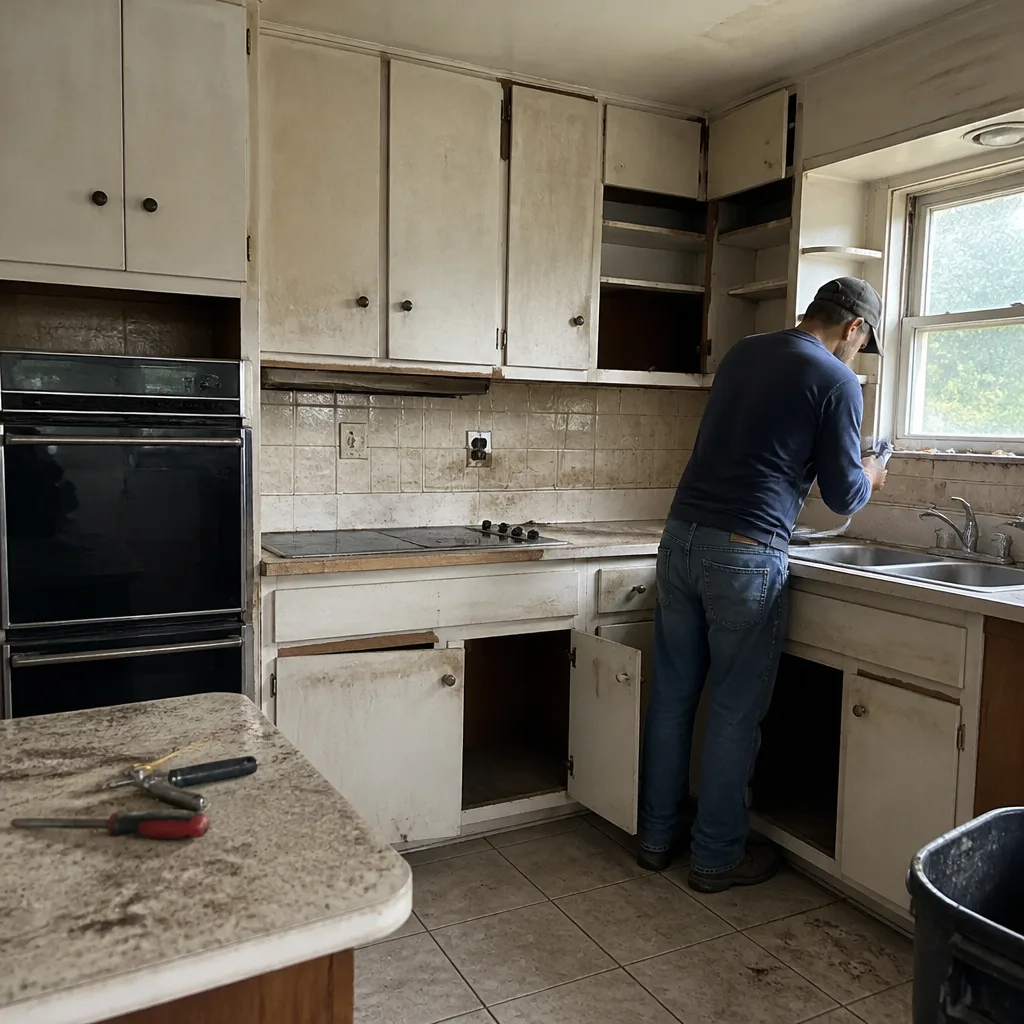
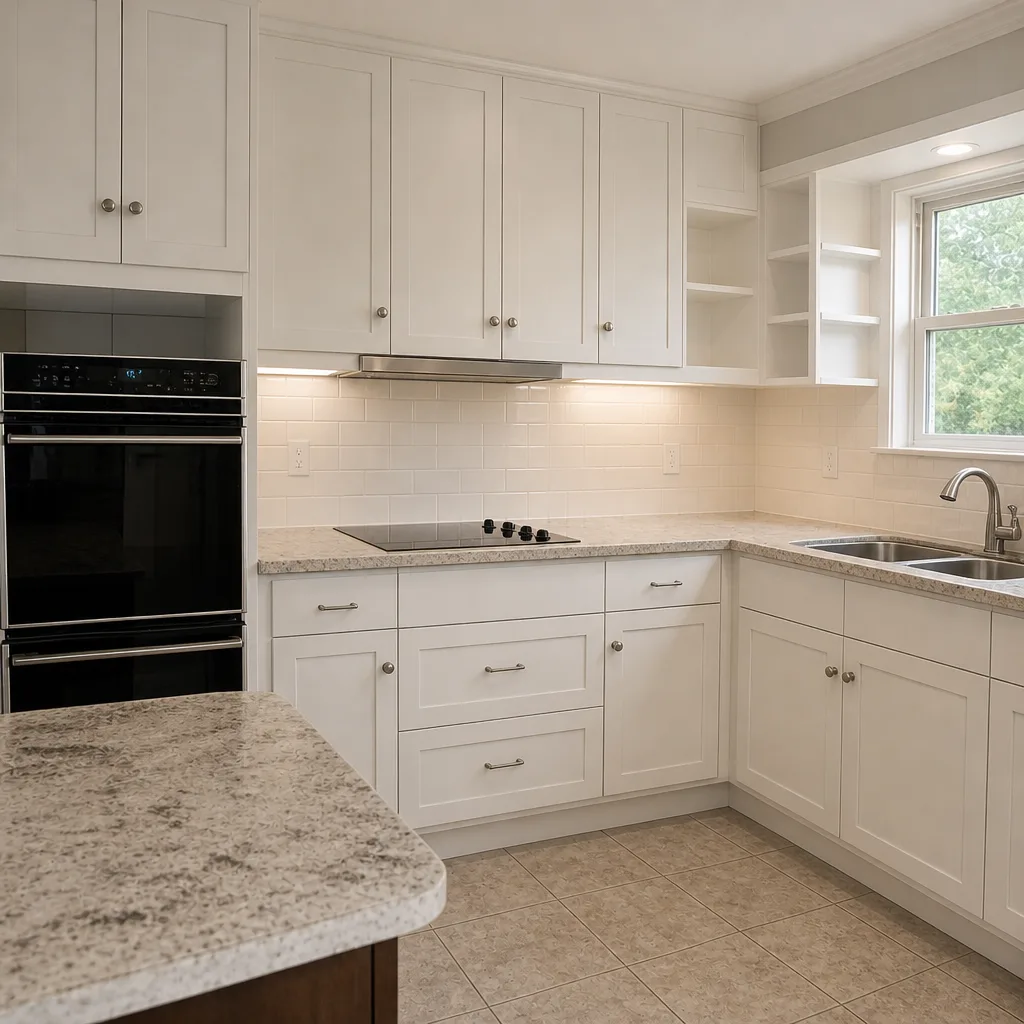
See the difference
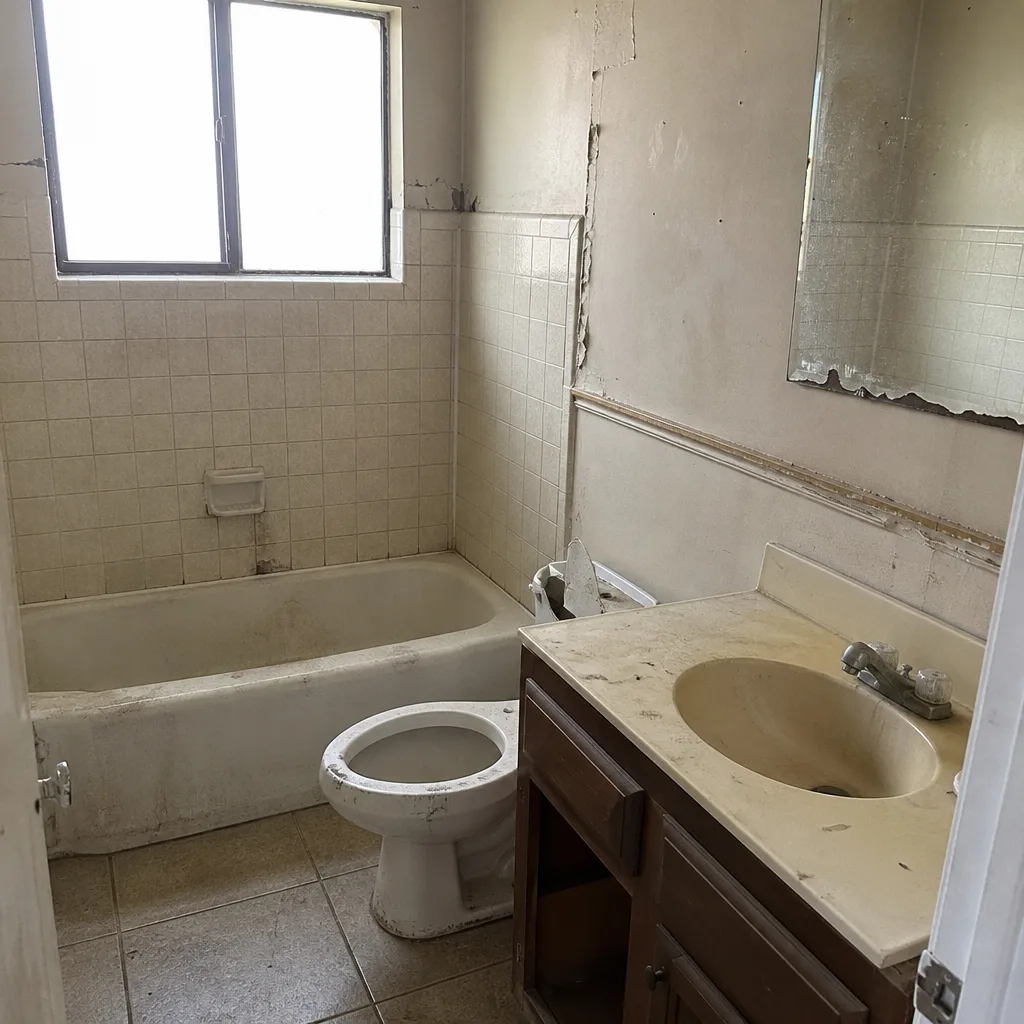 Before
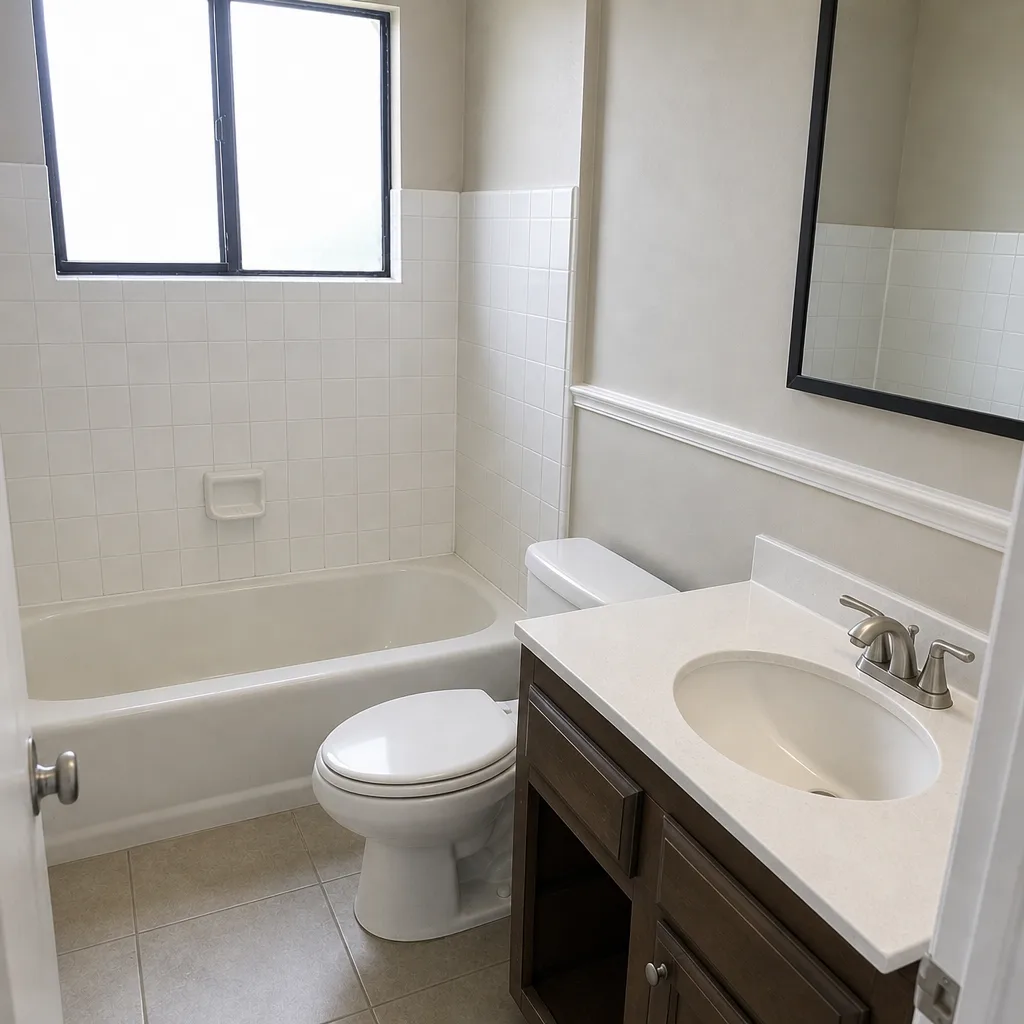 After
 Before
 After
 Before
 After