Last updated November 18, 2026




Free written scope consultation - allowances, timeline, and change-order rules on paper before a single trade is scheduled
The Complete Driveway & Pavers Guide for Carrollton Homeowners
Carrollton sits on some of the most expansive clay soil in North Texas, the same shifting ground that cracks concrete slabs and heaves foundations, and yet most paver installation guides never get past “compact the base.” That single gap is where most driveway failures start. A paver driveway is only as good as what’s under it, and what’s under Carrollton is a clay profile that behaves nothing like the sandy or gravelly soils the national installation standards were written around. In this guide we’ll walk through the soil prep that actually holds up here, how interlocking concrete, natural stone, and porcelain each handle Carrollton’s summers, what local HOA and city rules affect your layout, why edge restraint decides whether your pattern survives a decade, and a realistic timeline from material selection to final inspection.
Quick Answer
A paver driveway in Carrollton needs a deeper compacted aggregate base than national guidelines recommend, a flexible edge restraint set in concrete rather than plastic spikes, and a material choice matched to 100°F summers and wet shoulder seasons. Get those three right and a properly installed driveway can hold its pattern for well over a decade. Get them wrong and you’ll see settling, rutting, and shifted joints within a few years, no matter how good the pavers look on day one.
Styles & brands we work with
- Kitchen remodeling
- Bathroom remodeling
- Home additions & ADU
- Roofing
- Windows & doors
- Driveway & pavers
- Fence
Table of Contents
- Why Carrollton’s Expansive Clay Changes Everything
- Choosing a Paver Material for North Texas Heat
- Carrollton HOA and City Rules You Need to Know
- Edge Restraint: The Detail That Decides Your Driveway’s Life
- A Realistic Project Timeline
- What a Paver Driveway Costs
- Drainage, Slope, and Permeable Options
- Maintaining a Paver Driveway in Carrollton
Why Carrollton’s Expansive Clay Changes Everything
Expansive clay is soil that swells when it takes on water and shrinks as it dries. In a North Texas summer, that cycle plays out season after season, and it does it right under your driveway. A base course that was adequate in a temperate climate with stable subgrade can move, settle, and lose its compaction here. When that happens, pavers don’t fail because the pavers were bad. They fail because there was no longer a flat, stable platform under them.
The fix starts with the base, and the base needs to be deeper than what a generic national guide will tell you. National standards are written around average soil conditions. Carrollton is not average. On expansive clay, a thicker compacted aggregate base spreads the load and gives the pavers a stable layer that’s insulated from the movement below. Skipping that depth to save money on labor and material is the most common reason a new driveway looks tired in three years.
Soil prep in Carrollton typically involves:
- Excavating to the full depth the base requires, not just scraping off the grass
- Removing soft, organic topsoil and any loose clay that won’t compact
- Laying a woven geotextile fabric over the subgrade to separate clay from aggregate and slow migration
- Building the aggregate base up in compacted lifts rather than one thick dump
- Compacting each lift with a plate or roller and checking the grade as you go
The pattern holds for one simple reason: every lift of aggregate needs to reach full compaction before the next one goes on. Dumping twelve inches of base and compacting the top couple of inches does almost nothing for the bottom of the profile. If you take one thing from this guide, take that. We’ve laid pavers on this clay long enough to know that base depth and lift-by-lift compaction are the difference between a driveway that lasts and one that ruts. If your current drive is already showing dips, our driveway & pavers page covers what a rebuild involves.
Choosing a Paver Material for North Texas Heat
Carrollton summers push past 100°F, and the shoulder seasons swing between warm, wet spells and dry stretches. A paver material has to handle all of it without fading, spalling, or staining. The three broad families each behave differently here.
Interlocking concrete pavers
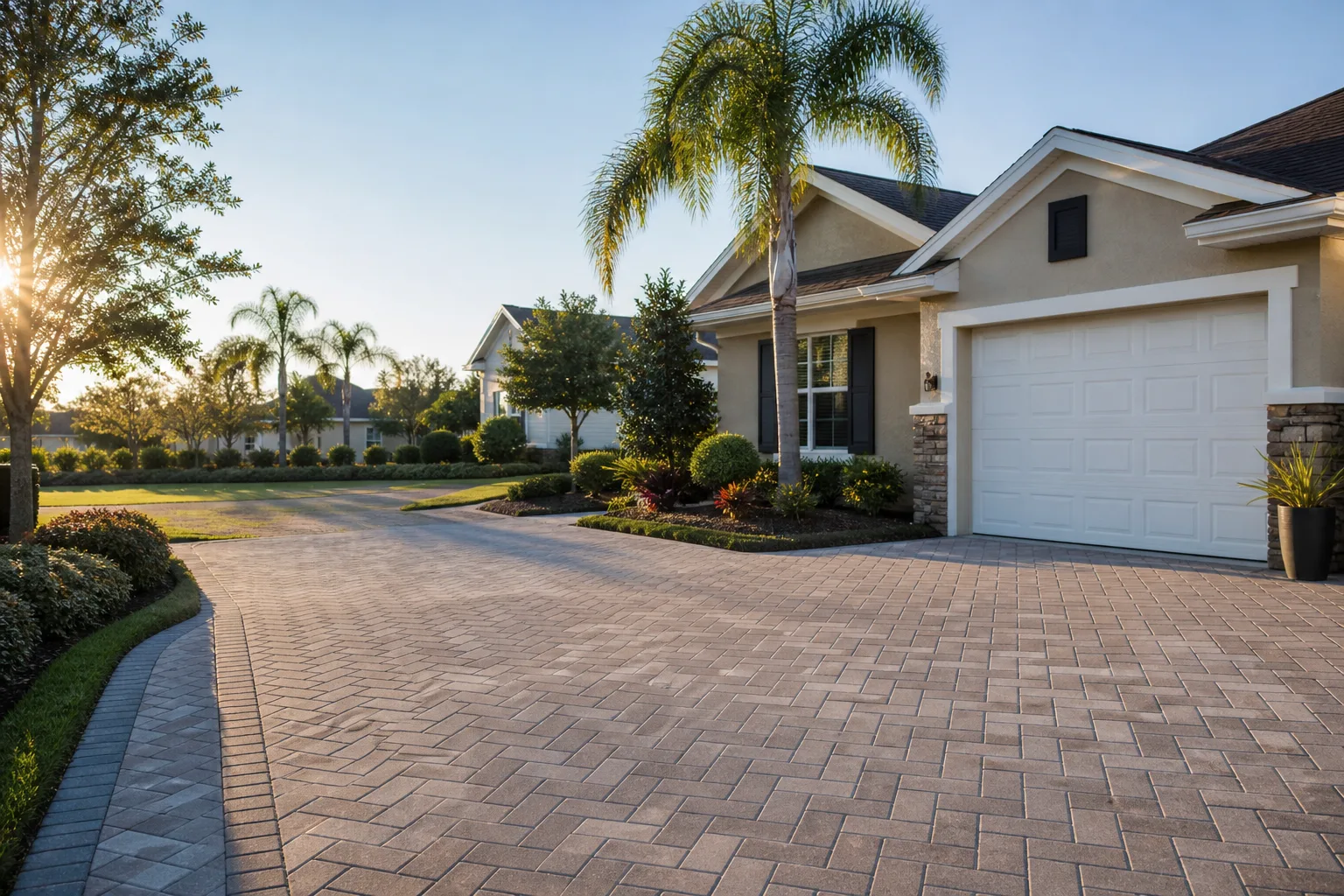
Interlocking concrete pavers are the workhorse choice for North Texas, and for good reason. Today’s premium systems from manufacturers like Techo-Bloc and Cambridge Pavers are engineered for dimensional consistency, so the joints lock tight and the field moves as a single sheet. They hold color well under intense sun, resist staining, and are easy to replace if a single unit chips. The best concrete pavers are made with tight, low-absorption mixes that stand up to wet-dry cycling. That’s a real difference from commodity concrete, which is why we build with professional-grade systems rather than whatever’s cheapest at the yard.
Natural stone
Natural stone such as travertine or limestone brings a genuinely distinctive look, and it handles heat fine. The catch is consistency and maintenance. Stone varies in thickness and porosity, and some limestones are more prone to staining and surface wear when water sits on them. It takes a skilled installer to set stone at an even grade so water sheds instead of pooling in low spots.
Porcelain pavers
Porcelain pavers offer the tightest surface, the widest color range, and excellent stain resistance. They don’t fade, they don’t absorb much water, and they look remarkably clean for years. The tradeoff is that porcelain is stiffer and more brittle than concrete, so a weak base punishes it faster. Set on a properly compacted and stabilized base with the right edge restraint, porcelain performs very well in Carrollton heat. Set on a shortcut base, it’s the first material to complain.
Whichever you lean toward, we’ll walk you through the material options side by side so the decision is yours to make with real information. Good installers use Quikrete for bedding and joint sand on concrete systems because it’s a known, consistent product, but the paver itself is the choice that shapes your driveway for the next twenty years.
Carrollton HOA and City Rules You Need to Know
Before you pick a paver, check the rules that govern where your driveway can go and what it can cover. Many Carrollton neighborhoods are under HOA covenants that restrict driveway width, appearance, and the percentage of your lot that can be hardscape. Plan around those first, because a beautiful driveway that violates a covenant can force you to change it.
The main rules that affect driveway projects in Carrollton:
- HOA design review. Many homeowner associations require an architectural review before work starts. That usually means submitting your paver sample, color, pattern, and a site plan showing width and setbacks.
- City setback and lot coverage. Driveways must respect setbacks and impervious cover limits. Wider driveways and expanded aprons count against lot coverage, so confirm the limits before you design.
- Curb cuts and driveway aprons. Any change to the connection between your driveway and the street, including widening a curb cut or modifying the apron in the right-of-way, needs city approval. The right-of-way is not yours to alter on your own.
- Permeable surface requirements. Some plans and HOA rules encourage or require permeable pavers, or permeable joints, to reduce runoff. That affects your material choice and how the base is built.
- Drainage and runoff. Changes that push water onto a neighbor’s property or into the street in new ways can be a code and a neighbor problem. Grade and drainage should be planned into the layout.
The right move is to pull your HOA docs and check with the city’s building department before finalizing a design. A paver contractor who’s done real work in Carrollton will know to ask about all of this up front. We plan the layout around your covenants and setbacks from the start, so the approval doesn’t come back to bite the project mid-install. Our technicians have up to 14 years of experience navigating exactly these kinds of local requirements.
Edge Restraint: The Detail That Decides Your Driveway’s Life
Ask most homeowners about their driveway and they’ll describe the pavers. The detail that actually determines whether the pattern holds for ten years or three is at the edge: the restraint. An unrestrained paver field spreads under load. Once the outer course creeps outward, the interlocking pattern loosens everywhere behind it, joints open, sand washes out, and the surface starts to rut.
There are two common approaches, and they are not equal.
Plastic spike edge restraint
Plastic edge profiles pinned down with spikes are fast and inexpensive. They work on pedestrian paths and light duty surfaces. On a driveway that takes the weight of vehicles, spikes work loose over time, especially in clay that moves with moisture. Once a spike backs out, that section of edge is free to spread.
Concrete border restraint
A concrete edge, poured and set against the outside of the paver field, is the durable standard for vehicle surfaces. It gives the pavers an immovable wall to lock against, and it keeps the field from spreading no matter what the subgrade under it does. On expansive clay, a cast-in-place concrete edge is essentially non-negotiable for a driveway. It’s the detail we don’t shortcut, because it’s the cheapest insurance a paver driveway can have.
If you’re planning a driveway that ties into other exterior work, the same standard applies to patios, walkways, and the rest of the hardscape. Our Construction Carrollton team handles the full exterior so the details stay consistent from the drive to the back yard.
A Realistic Project Timeline
A paver driveway is not a weekend project, and the schedule is driven as much by material lead times and inspection scheduling as by labor. Here’s how a typical Carrollton driveway project runs from first call to final inspection.
- Site visit and design (a few days). We measure, check the existing base and drainage, confirm setbacks and HOA requirements, and put together a layout and material options.
- Material selection and ordering (one to four weeks, sometimes longer). This is the variable that catches people off guard. Premium paver systems from Techo-Bloc or Cambridge Pavers aren’t always sitting in a yard, and special-order colors and patterns can take longer to arrive. Pick early so the install doesn’t stall waiting on product.
- HOA and permit approvals (varies). If the design needs architectural review or city sign-off, that runs in parallel with material ordering. Budget time for it. Don’t let an HOA packet sit.
- Demolition and excavation (one to two days). Removing the old surface and digging to full base depth. The crew finds out here whether there’s soft clay or buried debris to deal with.
- Base prep and compaction (one to three days). Fabric, aggregate lifts, compaction, and grading. This is the most important phase and it isn’t rushed.
- Paver installation and edge restraint (two to four days for a typical driveway). Setting the field, cutting edges, installing the concrete border, and locking the pattern.
- Joint sand, cleanup, and final inspection (one to two days). Sweeping joint sand into the field, cleaning up, and walking the finished job with you.
The total usually lands somewhere in the range of two to five weeks, and material lead time plus approvals are the big swing factors. Plan the project around the ordering window and you’ll avoid the most common delay we see.
What a Paver Driveway Costs
Paver driveway pricing in Carrollton comes down to the area being covered, the material, and the base prep the site needs. The table below lists typical estimated ranges for the main line items. These are estimates for planning, not quotes. The written estimate, based on your actual driveway and site, sets the final price.
- Paver material: budget varies significantly by system. Premium interlocking concrete sits mid-range, natural stone runs higher, and porcelain sits at the upper end.
- Base excavation and aggregate prep: a major cost line in Carrollton, because our clay demands depth and lift-by-lift compaction. This is where cheap bids are cheapest, and where they cut.
- Concrete edge restraint: a modest line item relative to the field, and the one that protects your entire investment.
- Bedding sand and joint sand: smaller cost, real function. Joint sand keeps the interlock tight and the field stable.
- Drainage work: varies with the site. A flat or oddly graded lot may need added slope correction or a drain.
- Demolition and haul-off: removing an old concrete or asphalt drive adds labor and disposal.
Because so much of the cost sits in base prep, two bids for the “same” driveway can differ a lot. A lower number that skips base depth isn’t a better deal, it’s a shorter-lived driveway. We put the scope in writing, line by line, so you can see exactly what base work and materials are included. For the full breakdown of what a project involves and what drives cost, the driveway & pavers service page has the detail.
Drainage, Slope, and Permeable Options
Water is the other half of the Carrollton soil story. Expansive clay moves because of moisture, so a driveway that sheds water properly protects not just the pavers but the subgrade under them. Standing water in low spots is trouble even on a well-built drive: it softens the base, feeds the clay’s swelling cycles, and stains and deteriorates the surface over time.
Good drainage in a paver driveway comes from three things:
- Slope. Driveways are built with a grade that moves water toward the street or a drain, away from the foundation and away from neighbors. Grade is set in the base, not adjusted at the finish.
- Permeable options. Permeable pavers or permeable joint systems let water pass through to a stone reservoir below instead of running off. That can be a real advantage on a lot with limited runoff options, and some plans encourage it. It also requires a deliberately built base and reservoir underneath, which is a bigger job, not a smaller one.
- Domestic drainage features. On flat or tricky lots, channel drains or French drains can route water where slope alone won’t.
If your current driveway has a spot that puddles after every rain, that’s a drainage signal worth addressing in the design rather than paving over. We look at the whole grade of the property before we set a single paver, because getting drainage right at the start is far easier than fixing it later.
Maintaining a Paver Driveway in Carrollton
A paver driveway is low maintenance when it’s installed right, but “low” isn’t “none.” The good news is that maintenance mostly protects the base and the joints rather than the pavers themselves. Concrete and porcelain pavers hold up to Carrollton sun for a very long time on their own.
What to stay on top of:
- Replenish joint sand when it drops. Joint sand is what keeps the interlock tight. If you can see gaps opening along the joints, top it up. This is a few minutes with a broom and a bag of sand.
- Keep the edge clean. Don’t let soil, mulch, or debris build up against the concrete border. The edge is doing structural work; keep it exposed and intact.
- Clean spill stains promptly. Vehicle fluids and oil are the main staining risk on concrete pavers. A quick rinse and a paver cleaner handles most of it.
- Watch for settling. A small dip here and there can be corrected by lifting and re-bedding a few pavers. A broad area that sinks is a sign of a base problem, and it’s worth an inspection before it spreads.
- Check drainage after heavy rain. A spot that starts pooling where it didn’t before usually means the grade or the joint sand has shifted and needs attention.
The pattern itself, once locked, tends to stay locked for many years. The routine work is modest, and it’s mostly about joint sand and keeping an eye on the edges. That’s the payoff of doing the base and restraint right the first time.
Common Mistakes to Avoid
- Using a national base depth on Carrollton clay. The standard that works for average soils is not enough for expansive clay. Shallow base is the number one reason driveways settle here.
- Compacting the top of the base only. Dumping aggregate and compacting the surface leaves loose material below, and the whole profile eventually moves. Each lift needs full compaction.
- Choosing plastic spike restraint for a vehicle surface. It’s fine for a garden path and wrong for a driveway on moving clay. A concrete edge is the durable choice.
- Skipping the HOA review until after the work starts. An unapproved width or color can force changes. Pull the covenants first.
- Ordering material late. Premium paver systems and special colors can have long lead times. Order early so the install doesn’t sit waiting on a truck.
- Ignoring the grade and drainage. Paving over a low spot traps water on the base. Fix the slope in the base stage.
- Picking material by looks alone. Porcelain and natural stone have real characteristics that a weak base punishes. Match the material to the site, not just the photo.
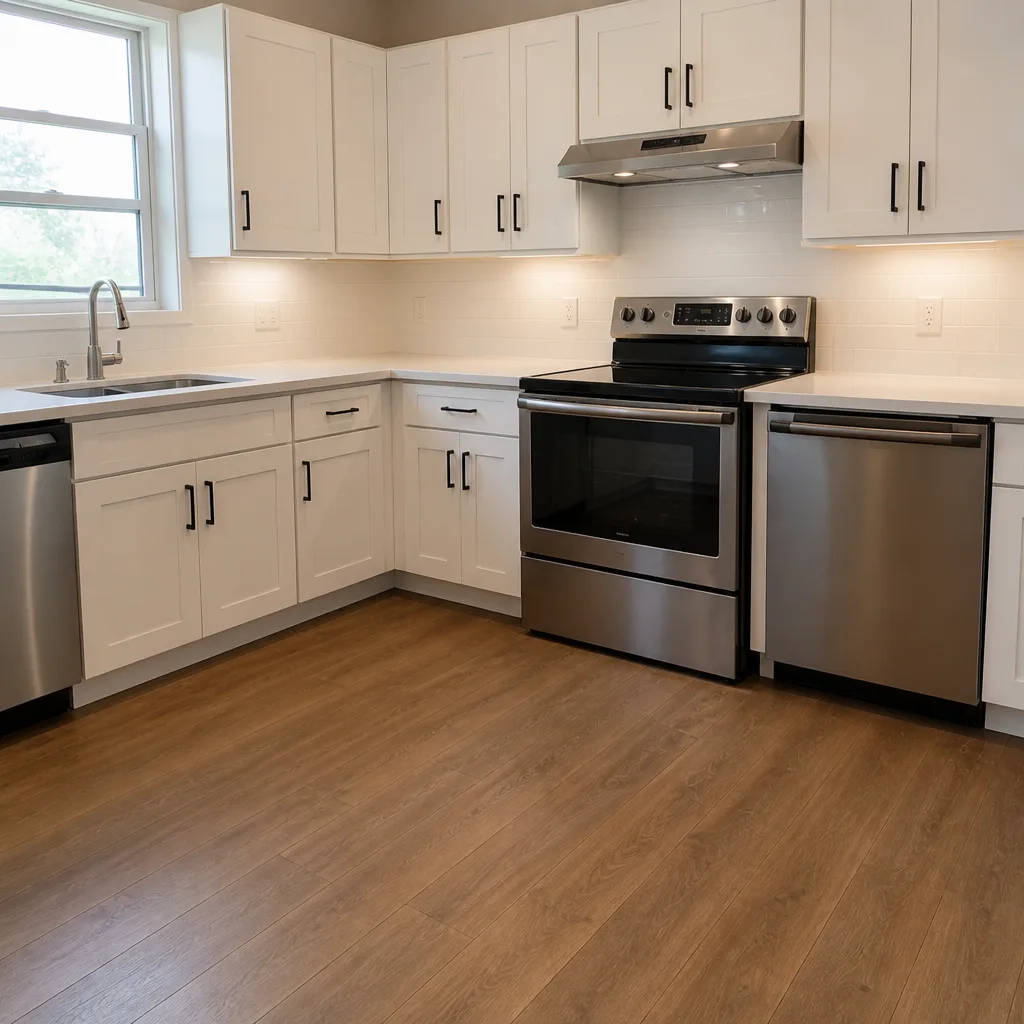
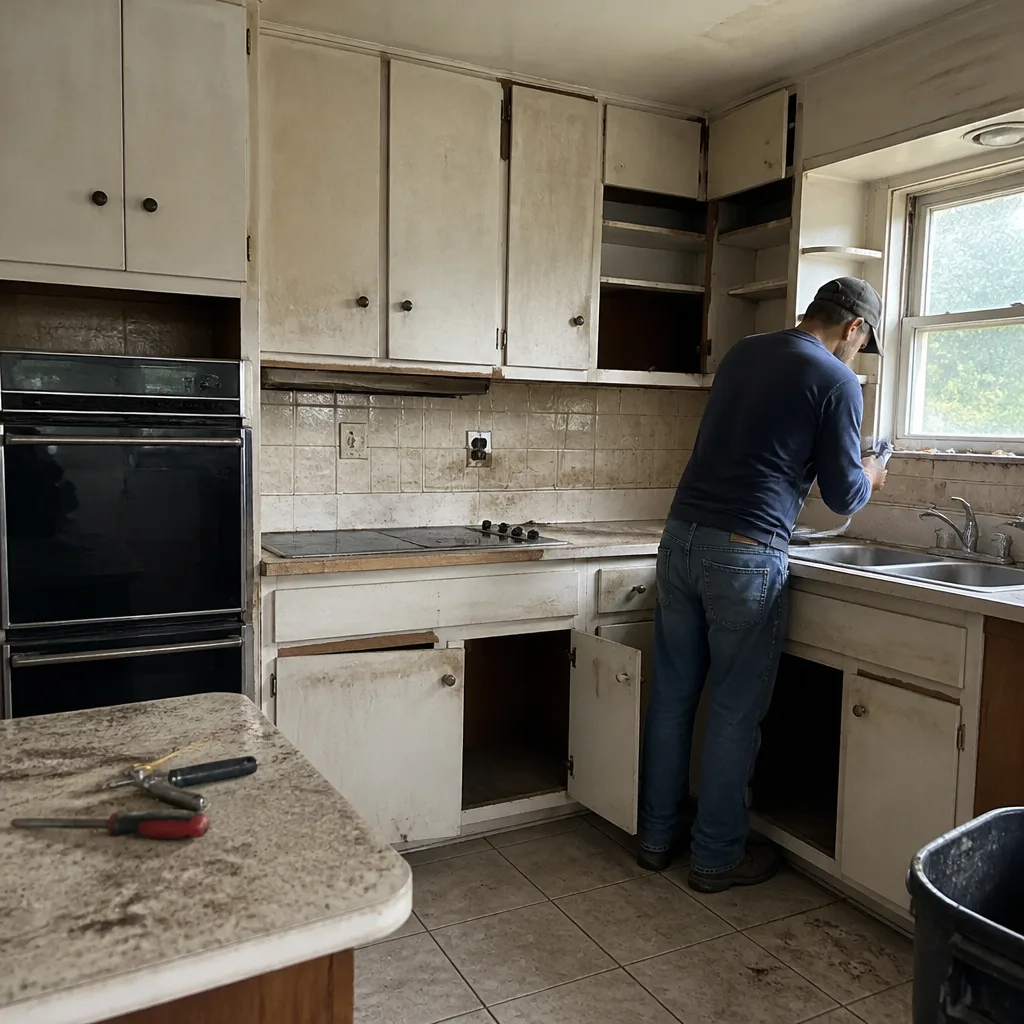
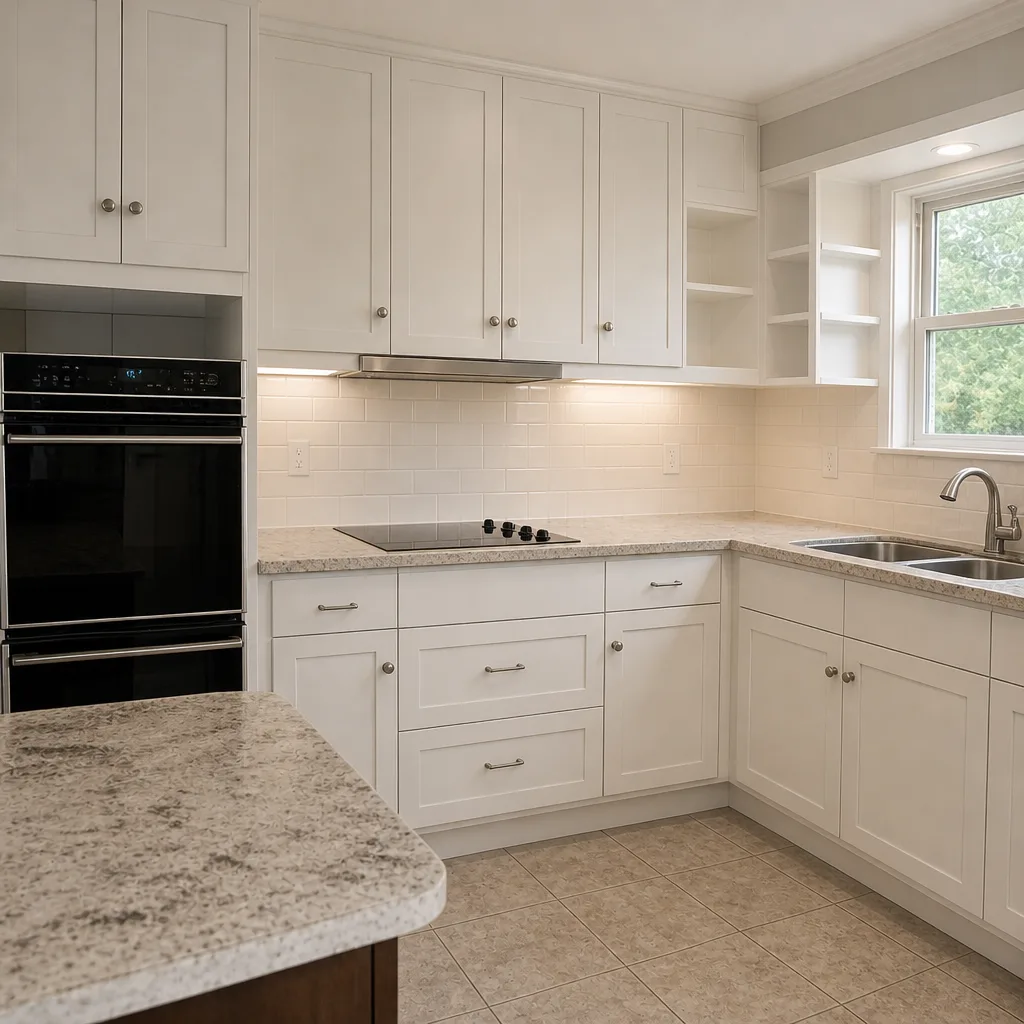
See the difference
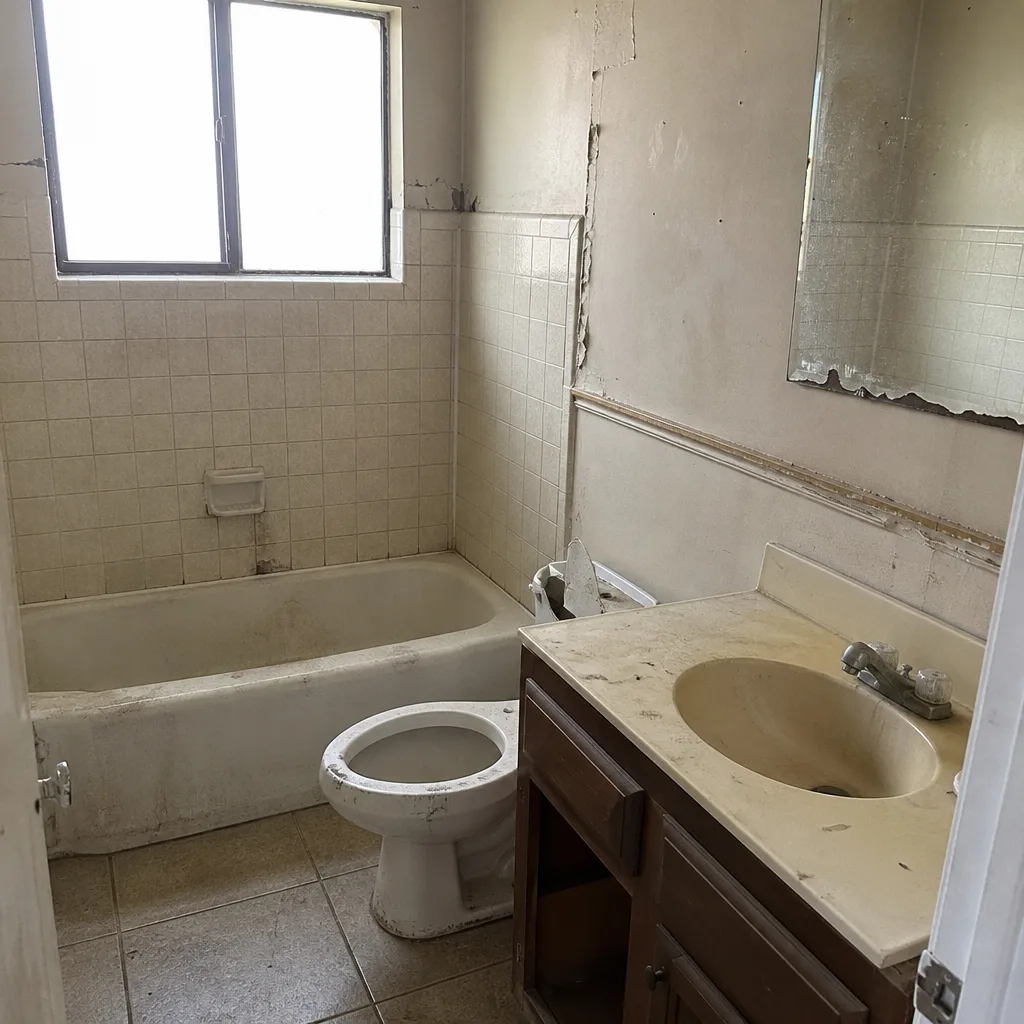 Before
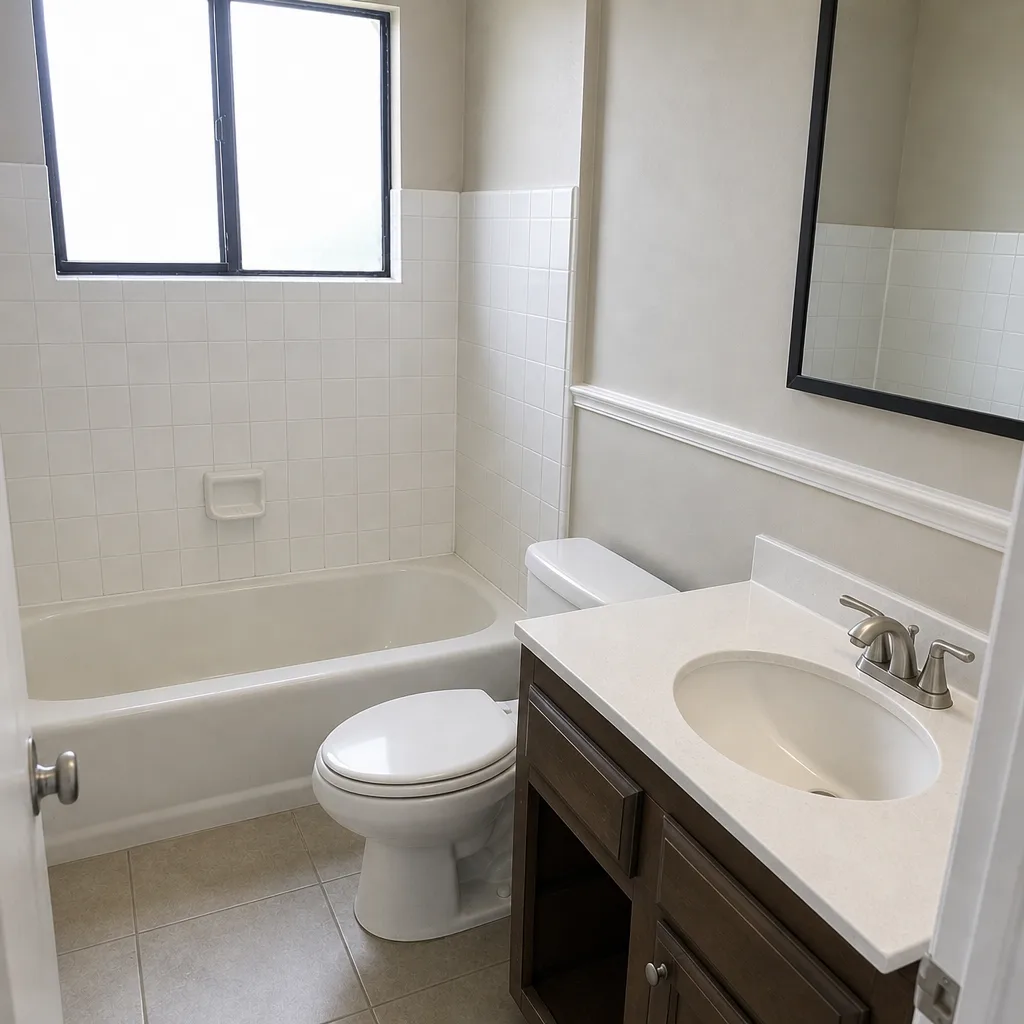 After
 Before
 After
 Before
 After
When to Call a Professional
Some projects are a good fit for a homeowner with a strong back and a lot of patience. A paver driveway in Carrollton usually isn’t one of them. The reason isn’t the pavers, it’s the ground under them. Getting the base depth, the compaction, the fabric, the edge restraint, and the drainage right takes experience with this specific clay, plus the equipment to compact a full profile. Get it wrong and the failure takes years to show while the cost sets in immediately.
Call a professional if your driveway has settled or rutted areas, if your existing concrete is cracking and you’re weighing a rebuild, if you’re planning a wider driveway or one that needs an HOA or city approval, or if you want porcelain, natural stone, or a custom pattern. Construction Carrollton works across the whole exterior of the home, from the driveway to the roofline. Our fence installation team uses commercial-grade systems from Master Halco, Ameristar, and Jerith, so if your driveway project runs up against a fence or gate, it can be planned together. We offer free estimates in Carrollton, with a written scope and line-item pricing so you know exactly what’s included before work starts.
Frequently Asked Questions
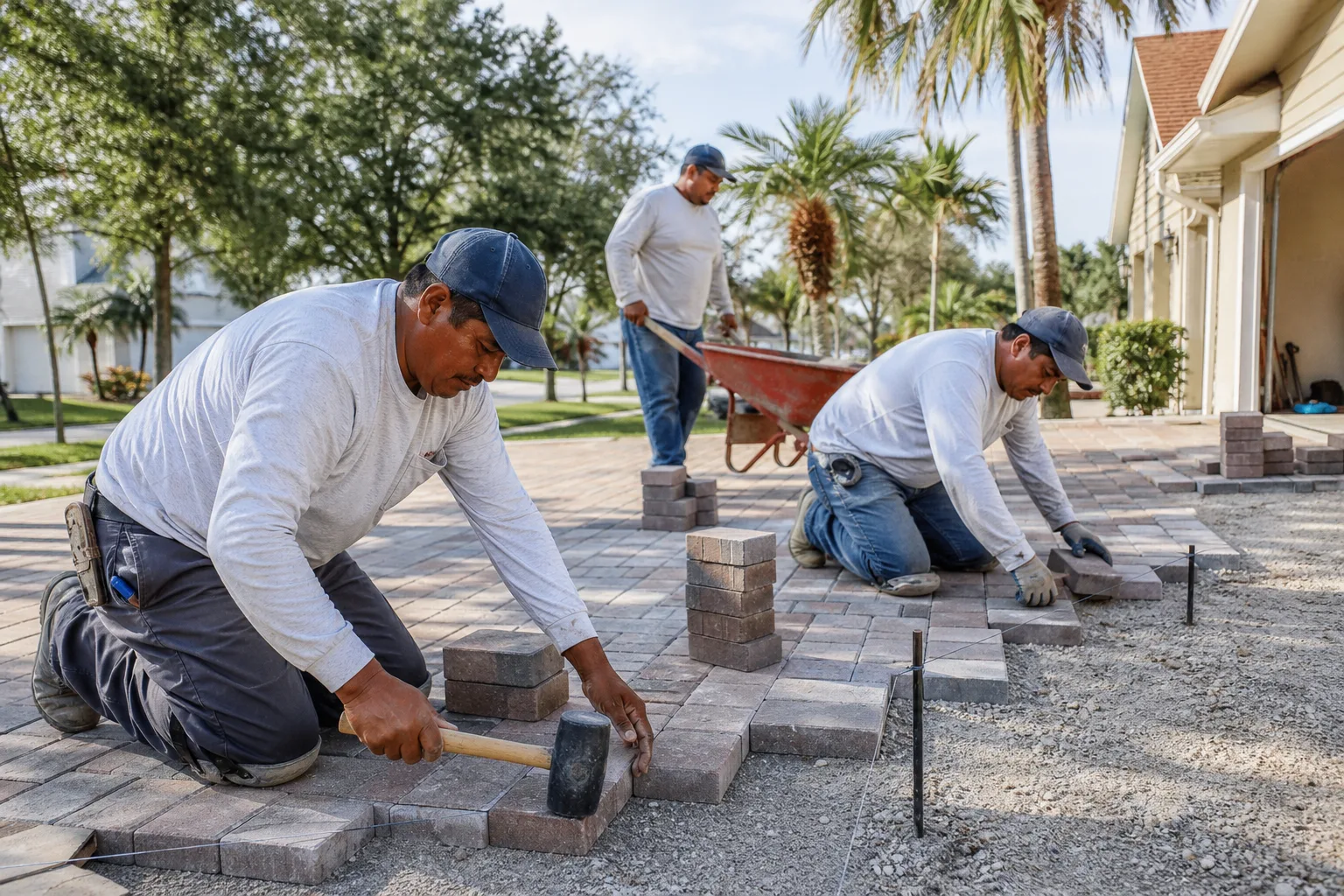
A properly installed paver driveway on a deep, well-compacted base with a concrete edge restraint can last well over a decade, and often much longer, with routine joint sand upkeep. The pavers themselves are durable; longevity mostly comes down to how the base was built and how the edge is restrained.
Not every driveway project needs a permit, but changes to your curb cut, driveway apron, or right-of-way connection typically do, and most neighborhoods have HOA design review as well. Check both your HOA covenants and the city’s building department before work starts.
Pavers generally perform better on expansive clay because the interlocking field flexes with minor movement instead of cracking like a rigid slab. Concrete pavers set on a proper base with a concrete edge resist the settling and cracking that concrete drives are known for in this soil.
Yes. Premium concrete pavers, porcelain, and natural stone all handle 100°F-plus summers well. The material that matters most is a tight, low-absorption paver from a quality manufacturer, set on a correct base. Surface heat is much less of an issue for the pavers than base movement is.
Cost depends on the area covered, the material, and how much base prep your site needs, since Carrollton clay usually demands a deeper base than other regions. We put every line item in a written estimate so you can see what’s included. Call (888) 584-9525 to schedule your free estimate, and the written quote sets your final price.
Permeable pavers, or pavers with permeable joints, let water drain through the surface into a stone reservoir built below, rather than running off. Standard pavers shed water across the surface via slope and drains. Permeable systems need a specifically built base and are a bigger install, but they can help on lots with limited runoff options.
The Bottom Line
A paver driveway in Carrollton is a decision about the ground under it as much as the pavers on top. National install guides assume average soil. Our expansive clay rewards deeper base prep, lift-by-lift compaction, and a concrete edge restraint that holds the pattern for the long run. Material choice matters too: premium interlocking concrete from manufacturers like Techo-Bloc and Cambridge Pavers handles the heat, while porcelain and natural stone need an even sturdier base. Get the HOA and city rules straight early, order material before you need it, and plan around the drainage. Do those things and the driveway holds its pattern for years. If you’re ready to stop guessing about base depth and start planning a driveway that lasts, our team is here.
Call (888) 584-9525 for a free estimate on your Carrollton paver driveway. We answer 24/7. Fast dispatch from 7am to 7pm, Sunday through Friday. If you’re planning a larger exterior project, from a driveway to an addition, our home additions & ADU team can help you plan it as one build.
Written by the team at Construction Carrollton.